Growing lettuce in aquaponics is straightforward: set up a fish tank and grow bed, cycle your water for 4–6 weeks to establish the bacterial colony, then transplant seedlings into your chosen media. Maintain a water pH of 6.0–7.0 and a temperature between 65–72°F, and you will be harvesting crisp, fresh leaves in as little as four weeks from transplant.
Key Takeaways
- Lettuce is one of the fastest-cropping plants in aquaponics, reaching harvest in 4–6 weeks from transplant.
- Floating raft (deep water culture) systems produce the fastest lettuce growth and are the most scalable option for home growers.
- Water pH between 6.0 and 7.0 is critical — even a drift of 0.5 units outside that range can reduce nutrient uptake significantly.
- Loose-leaf and butterhead varieties consistently outperform heading types like iceberg in aquaponic environments.
What Is Aquaponics and Why Is Lettuce the Perfect Starting Crop?
Aquaponics combines fish farming (aquaculture) with soil-free plant growing (hydroponics) in one closed-loop system. Fish produce waste. Beneficial bacteria convert that waste into nitrates. Nitrates feed your plants. The plants clean the water, which cycles back to the fish. It is a continuous, near-self-sustaining loop that requires surprisingly little external input once it is up and running.
Lettuce sits at the top of that loop beautifully. It is what growers call a light feeder, meaning it does not demand sky-high nutrient concentrations the way tomatoes or peppers do. Industry reports consistently list lettuce as the highest-volume crop produced in commercial aquaponics facilities worldwide, accounting for a dominant share of total aquaponic plant production. Its fast growth cycle means you see results quickly — an important confidence builder for anyone new to the system.
Beyond the practical benefits, lettuce is highly versatile. You can grow dozens of varieties, harvest using a cut-and-come-again method that extends each plant’s productive life across multiple weeks, and eat the results fresh without any post-processing. If you are exploring which plants perform best in aquaponic systems, lettuce almost always tops the list — and for very good reason.
How Do You Set Up an Aquaponics System for Lettuce?
Setting up your system correctly from the start saves enormous frustration later. There are three main system types you will encounter, and each suits lettuce differently depending on your space, budget, and how much you want to scale.
Media Bed Systems
A media bed fills a grow tray with porous material — expanded clay pebbles, lava rock, or gravel — through which nutrient-rich water floods and drains on a timed cycle. This is the most forgiving system for beginners because the media itself acts as a biological filter and physically supports plant roots. Lettuce grows extremely well here. The main limitation is that large heading varieties like iceberg can become unwieldy as they develop, so stick to loose-leaf and butterhead types in shallow media beds.
Nutrient Film Technique (NFT)
NFT channels a thin, continuous stream of water along the bottom of a channel, bathing the lower roots while the upper roots access oxygen. It uses less water than a media bed and is easy to keep clean, but the biological filtration is weaker — you will need a separate biofilter to support a healthy bacterial colony. NFT works well for smaller lettuce varieties grown at a moderate density.
Floating Raft (Deep Water Culture)
This is the commercial favourite for lettuce at every scale. Plants sit in net pots cut into foam rafts floating on a tank of aerated, nutrient-rich water. Roots dangle freely into the water, absorbing nutrients around the clock. Floating raft aquaponics produces some of the fastest lettuce growth rates of any system type, and scaling is simple — add more raft surface area. The non-negotiable requirement is robust aeration: because roots are submerged 24 hours a day, dissolved oxygen must stay above 6 mg/L or root rot sets in quickly.
Cycling Your System Before You Plant
Before fish or plants enter the picture, your system must cycle. Cycling establishes the beneficial bacterial colony that converts toxic ammonia into plant-usable nitrates. This typically takes 4–6 weeks without a starter culture, or 1–2 weeks with a commercially available bacterial inoculant. You will know the cycle is complete when ammonia and nitrite readings consistently hold near zero and measurable nitrates are present in the water. Skipping this step is the single most common mistake new aquaponic growers make — planting into an uncycled system exposes lettuce to ammonia spikes that stunt or kill seedlings within days.
Which Lettuce Varieties Grow Best in Aquaponics?
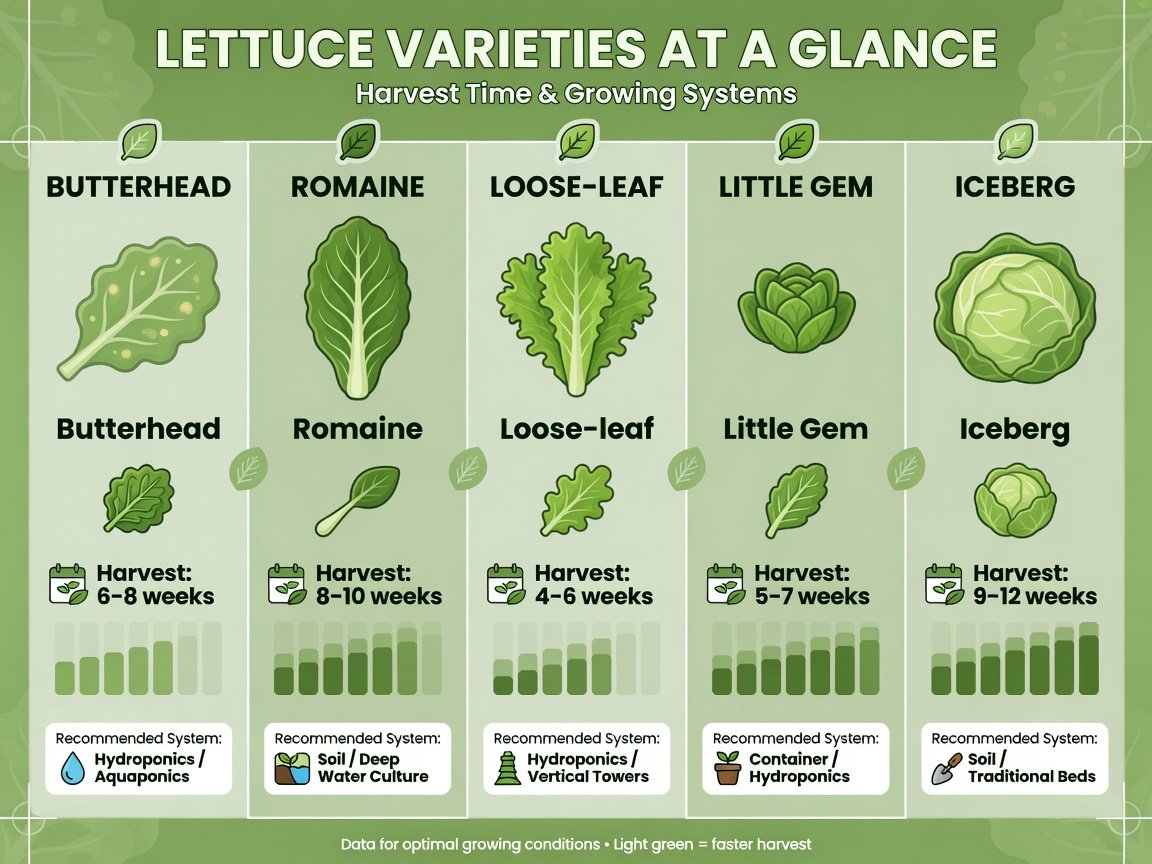
Not all lettuce behaves the same way when its roots are submerged in water rather than anchored in soil. Loose-leaf and butterhead types are consistently the top performers across all aquaponic system types. Here is a comparison of the most popular varieties for home and small-scale production in 2026.
| Variety | Harvest Time (from transplant) | Daily Light Needed | Best System | Key Notes |
|---|---|---|---|---|
| Butterhead (Bibb, Boston) | 4–5 weeks | 12–14 hours | Media bed, DWC | Soft, tender leaves; extremely popular; handles minor pH swings well |
| Romaine (Cos) | 5–7 weeks | 14–16 hours | DWC, NFT | Crisp and upright; needs slightly more spacing and light |
| Loose-Leaf (Red, Green, Oakleaf) | 3–5 weeks | 12–14 hours | All system types | Fastest grower; ideal for beginners; excellent cut-and-come-again candidate |
| Little Gem | 4–6 weeks | 12–14 hours | Media bed, DWC | Compact romaine hybrid; great for smaller systems |
| Iceberg (Crisphead) | 7–10 weeks | 16+ hours | DWC only | Slow-growing and demanding; not recommended until your system is fully mature |
For most home growers, loose-leaf and butterhead varieties deliver the best return on effort. They grow quickly, tolerate minor fluctuations in water conditions better than heading types, and produce multiple harvests from a single plant. Romaine is worth adding once your system is established and you want something with a slightly longer growing arc.
What Are the Ideal Water Conditions for Growing Aquaponic Lettuce?
Water quality is the foundation of everything in aquaponics. Get these parameters right and your lettuce will practically grow itself. Neglect them and no amount of additional light or supplemental nutrients will compensate.
pH: The Master Variable
Keep your water pH between 6.0 and 7.0. The tightest zone for lettuce is around 6.4–6.8. Below 6.0, iron and manganese can reach toxic concentrations in the root zone. Above 7.0, iron, manganese, and phosphorus become progressively less available to plant roots despite being present in the water. Research in aquaponic production systems consistently shows that a pH drift of just 0.5 units outside the optimal window can reduce nutrient uptake noticeably and trigger visible deficiency symptoms within 48–72 hours.
Test pH daily during your first month of operation. Once the system is stable and mature, testing every two to three days is usually sufficient. Use pH Up (potassium hydroxide) to raise pH and pH Down (phosphoric acid) to lower it. Always add small amounts and retest — overcorrecting in a single step creates swings that stress both fish and plants.
Temperature
Lettuce is a cool-season crop and behaves accordingly in aquaponics. Water temperature between 65–72°F (18–22°C) is the sweet spot for root health and leaf production. Above 75°F (24°C), lettuce bolts — the central stem elongates rapidly and leaves turn bitter. If you are running an indoor system during warmer months, a small aquarium chiller or a rotating ice-bottle trick (freezing water in sealed bottles and alternating them into the tank) can hold temperatures in range without significant cost.
Ammonia, Nitrite, and Nitrate Levels
Ammonia and nitrite should read as close to zero as possible at all times — both are toxic to fish above minimal thresholds and harmful to plant roots in the longer term. Nitrates, the plant-usable end product of the bacterial conversion process, can safely run between 20–80 ppm for healthy lettuce growth. Above 150 ppm, you risk visible nutrient burn on tender leaf edges. If nitrates climb that high, a partial water change of 20–30% will bring levels back into the productive range without destabilising your bacterial colony.
How Much Light Does Lettuce Need in an Aquaponics System?
Lettuce needs between 12 and 16 hours of light per day for consistent, productive growth. In outdoor or greenhouse systems with good natural light, this is easy to achieve for most of the year. In fully indoor setups, you will need to supplement — or fully replace — natural light with artificial grow lights.
LED grow lights are the standard recommendation for indoor aquaponics in 2026. They run substantially cooler than older high-pressure sodium (HPS) fixtures, consume 40–60% less electricity for equivalent light output, and can be tuned to deliver the red and blue spectrum wavelengths that lettuce uses most efficiently for photosynthesis. Full-spectrum LEDs work perfectly well if you prefer simplicity over spectrum tuning.
Hang fixtures 12–24 inches above the canopy depending on the light’s intensity rating. Too close and you risk bleaching or heat stress on the upper leaves. Too far and plants stretch leggy, reaching upward and producing thin, weak stems. If you are setting up an indoor system and haven’t chosen fixtures yet, the guide to choosing the perfect grow lights for indoor aquaponics walks through the full spectrum and fixture selection process in detail.
Give your lettuce a genuine dark period. Running lights continuously might seem like it would maximise growth, but continuous light actually causes tip burn — a calcium deficiency symptom triggered by poor transpiration rather than a true calcium shortage. An 8-hour dark window lets the plant rest, regulate water movement through its tissues, and distribute calcium effectively to the leaf margins where it is most needed.
How Do You Plant Lettuce in an Aquaponics System Step by Step?
The planting process splits into two distinct stages: germination and transplanting. Taking your time here sets the crop up for a smooth, productive growing period with minimal setbacks.
- Source quality seeds. Choose a variety suited to your system type and ambient temperature range. Fresh seeds from the current season germinate significantly more reliably — lettuce seed germination rates decline measurably after 2–3 years in storage, so buy fresh each season.
- Germinate in starter plugs. Place seeds in rockwool cubes, rapid rooter plugs, or coco coir plugs moistened with plain, pH-neutral water. Keep them at 65–70°F in a humid, lightly lit environment. Most lettuce varieties germinate within 3–7 days. Do not expose seeds to intense light during this stage — gentle indirect light or a seedling heat mat is sufficient.
- Wait for true leaves. Once seedlings show their first true set of leaves (not the initial rounded seed leaves), they are ready for the system. This usually happens 10–14 days after germination. Transplanting too early, before the root system is established, increases transplant shock significantly.
- Prepare your grow media or raft. If you are using a media bed, expanded clay pebbles (hydroton) are the most popular choice for lettuce — pH-neutral, excellent drainage, and fully reusable across multiple growing cycles. For a comprehensive breakdown of material options, the complete guide to aquaponics grow media covers every common choice with their trade-offs.
- Transplant carefully. In a media bed, create a small pocket at the surface, lower the seedling plug in so the base sits level with the top of the media, and firm the surrounding pebbles gently. In a floating raft, simply push the plug into the net pot opening in the foam board until it sits securely. Handle seedlings by the plug, not the stem — stem damage at this stage is often fatal.
- Space plants correctly. Allow 6–8 inches between loose-leaf plants and 10–12 inches for butterhead or romaine. Crowded plants compete for light and restrict airflow between leaves, which raises humidity locally and significantly increases the risk of fungal disease.
- Monitor the first 48 hours. Keep lighting at moderate intensity for the first two days and verify that water is reaching new roots correctly — whether through media wicking in a flood-and-drain system or direct root submersion in a raft setup. Most transplant losses happen in this window.
What Fish Work Best With Lettuce in an Aquaponics System?
Your fish are the nutrient engine driving your entire system. The waste they produce — and the rate at which they produce it — directly determines how vigorously your lettuce grows. Choosing the right species for a lettuce-focused system matters more than beginners often realise.
Tilapia are the most widely used species in aquaponics globally. They are fast-growing, highly tolerant of variable water conditions, and produce abundant waste that drives excellent plant growth. The one practical consideration: tilapia prefer water above 70°F, which sits slightly above lettuce’s ideal. Most growers manage this by running the system at 68–70°F — a compromise that works comfortably for both.
Trout are an excellent choice if your environment naturally runs cooler. They thrive at 55–65°F, which aligns almost perfectly with lettuce’s preference, and they produce high-quality waste for plant nutrition. The trade-off is that trout are more sensitive to water quality fluctuations and require higher dissolved oxygen levels than tilapia. Goldfish, koi, and perch are popular choices for backyard or ornamental systems where consuming the fish is not part of the plan. For a detailed look at matching species to your specific setup and goals, the guide to choosing the perfect fish for your aquaponics system covers the full decision process.
How Do You Manage Pests and Diseases in Aquaponic Lettuce?
One of the genuine advantages of aquaponics over soil-based gardening is reduced pest and disease pressure. Without soil, soil-borne pathogens have no vector into your system under normal conditions. That said, a handful of pests still find their way in — and because your system contains fish, most conventional pesticides (including many labelled as organic) are off the table entirely.
Common Pests to Watch For
- Aphids — Small green, black, or white insects clustering on leaf undersides. Inspect weekly. A firm blast of water dislodges colonies effectively. In greenhouse setups, introducing ladybirds or parasitic wasps provides ongoing biological control.
- Fungus gnats — Most common in media bed systems. Adult gnats are harmless; their larvae can damage roots and are harder to address. Allowing the top layer of media to dry slightly between flood cycles discourages egg-laying and breaks the lifecycle.
- Whitefly — A persistent greenhouse pest. Yellow sticky traps catch adults before populations escalate. The parasitic wasp Encarsia formosa is highly effective as a biological control for established infestations.
- Tip burn — Not a pest, but the most common disorder in aquaponic lettuce. Brown, papery margins on inner leaves signal insufficient calcium movement to leaf tips. Improve airflow with a small fan positioned to gently circulate air across the canopy, and verify that calcium levels are in the 60–80 ppm range.
The guiding principle in aquaponic pest management is always prevention over cure. Inspect plants weekly, maintain good airflow, and remove any diseased or heavily infested plants immediately before issues spread to neighbouring crops.
When and How Do You Harvest Aquaponic Lettuce?
Harvesting is the most satisfying step in the process, and doing it correctly extends each plant’s productive life considerably.
Most aquaponic lettuce varieties are ready to harvest 4–6 weeks after transplanting, depending on variety, light level, and water temperature. A plant ready for its first harvest looks lush and full — outer leaves large and well-developed, with the inner rosette still tightly packed. Do not wait until the plant bolts. Once the central stem begins to elongate visibly and the plant is pushing upward rather than outward, leaf quality drops quickly and bitterness increases.
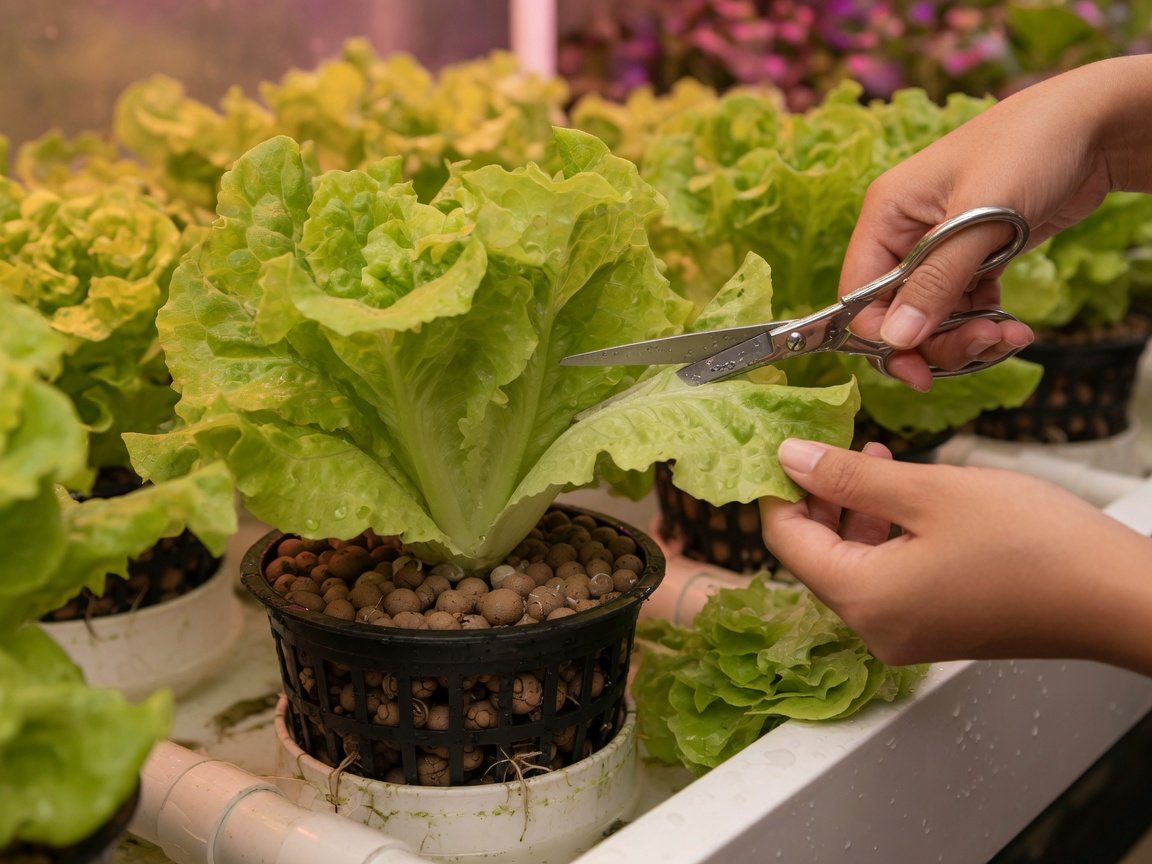
For loose-leaf varieties, use the cut-and-come-again method. Remove the outermost 30–40% of leaves by cutting cleanly at the base with sharp, clean scissors. Leave the inner leaves and growing tip completely intact. New leaves grow continuously from the centre, giving you multiple harvests from a single plant over 6–10 weeks. A well-managed loose-leaf plant in a productive aquaponics system can yield two to three times more total leaf mass through this method compared to a single whole-plant harvest.
For butterhead and romaine varieties, you can either harvest the whole head in a single cut at the base or progressively remove outer leaves as they mature. Whole-head harvest clears space for a new transplant immediately, which is useful if you are running a staggered planting schedule to maintain a continuous supply. Once lettuce is growing reliably in your system, growing arugula alongside your lettuce follows a nearly identical process and adds a peppery, flavourful contrast to your harvest basket.
Frequently Asked Questions About Growing Lettuce in Aquaponics
How long does it take to grow lettuce in aquaponics?
Most loose-leaf and butterhead varieties are harvest-ready 4–6 weeks after transplanting seedlings. Romaine takes a little longer — around 5–7 weeks. Add 10–14 days for germination before transplanting, and you are looking at roughly 6–8 weeks from seed to first harvest in a well-maintained system. Warmer water temperatures (within the safe range) and longer daily light periods both accelerate growth.
What pH level is needed for aquaponic lettuce?
Aim for 6.0–7.0, with 6.4–6.8 being the optimal zone. This range keeps nutrient availability high for the lettuce while remaining hospitable for the nitrifying bacteria your system depends on. pH drifts naturally in an active system as plants uptake nutrients and fish produce waste, so regular testing is essential rather than optional.
Can I grow lettuce in a small home aquaponics system?
Absolutely. Lettuce is one of the most space-efficient crops you can grow in aquaponics. A basic media bed system powered by a 50-gallon fish tank can support 12–20 lettuce plants simultaneously. A 2×4 foot floating raft board holds 8–12 plants comfortably depending on spacing. Lettuce’s shallow root system means you do not need deep grow beds, which keeps the entire footprint small and the setup costs reasonable.
Do I need to add extra nutrients for lettuce in aquaponics?
In a mature, adequately stocked system, fish waste supplies enough nitrogen for healthy lettuce growth. However, iron, calcium, and potassium are elements fish do not provide in sufficient quantities for plant needs. Chelated iron (Fe-EDTA or Fe-DTPA) is the most commonly needed supplement in aquaponic lettuce systems. Watch for yellowing between green leaf veins as a classic sign of iron deficiency, and brown or crispy leaf margins as an indicator of calcium or potassium shortfall.
Why is my aquaponic lettuce turning yellow?
Yellowing is most commonly caused by one of three things: pH running too high (which locks out iron and other micronutrients), an iron deficiency even at correct pH, or insufficient nitrogen from an understocked or immature system. Start by testing pH and correcting if it has drifted above 7.0. If pH is in range, test your iron levels. If both check out, review your fish stocking density and daily feeding rates — a lettuce-focused system generally needs 0.5–1 lb of fish per square foot of grow space.
What is the best aquaponics system type for growing lettuce?
Floating raft (deep water culture) is the most productive system for lettuce specifically, offering constant nutrient access, easy plant management, and straightforward scalability. For first-time growers, a media bed system is more forgiving of management mistakes because the grow media acts as a built-in biological buffer. NFT is highly efficient but requires closer attention to flow rates and separate biofilter maintenance. Whichever system you choose, the biological principles remain identical.
Can lettuce bolt in an aquaponics system?
Yes — bolting is triggered by high temperatures, excessively long days (more than 16 continuous hours of light), or plant stress rather than the aquaponic method itself. Keeping water temperature below 72°F and providing an 8-hour dark period each night are the two most effective controls. Bolt-resistant varieties such as ‘Buttercrunch’, ‘Jericho’ romaine, and ‘Nevada’ are worth selecting if your growing environment runs warm.
Final Thoughts: Start Simple, Harvest Often
Growing lettuce in aquaponics is one of the most accessible, rewarding crops you can start with. The combination of fast growth, low nutrient demands, tolerance for minor system fluctuations, and flexibility across all system types makes it the ideal crop for building confidence and establishing good management habits before moving on to more demanding plants.
Here is a practical action plan to get started this week:
- Days 1–3: Choose your system type — media bed for simplicity, floating raft if you want maximum lettuce output — and source your components (tank, pump, grow bed or raft board, aeration).
- Days 4–7: Assemble the system, add dechlorinated water, and introduce your bacterial starter culture. Begin the cycling process.
- Weeks 1–5: Cycle your system while germinating your first lettuce seeds in starter plugs. Test pH and ammonia every 1–2 days. Adjust as needed.
- Week 6: Transplant seedlings once the system has cycled fully and seedlings are showing their first true leaves. Space correctly and reduce light intensity for the first 48 hours.
- Weeks 8–10: Begin your first cut-and-come-again harvest. Start your second batch of seedlings now to keep a staggered supply running continuously.
Lettuce is not the finish line — it is the starting block. Once your system is cycling reliably and your lettuce is producing consistent harvests, the range of crops you can add grows considerably. The same well-balanced water that your lettuce loves will support watercress, kale, chard, and herbs with only minor adjustments to light and spacing.
One Reply to “How Do You Grow Lettuce In Aquaponics? – Aquaponics made simple”