The best plants for aquaponics in 2026 are leafy greens, culinary herbs, and fruiting vegetables — with lettuce, basil, kale, tomatoes, and cucumbers consistently producing the biggest, fastest harvests. Research shows aquaponics plants can grow up to 50% faster than their soil-grown equivalents, and with the right crop selection, almost any system can deliver continuous, abundant harvests throughout the year. This guide covers exactly which plants belong in your setup — and why.
Key Takeaways
- Aquaponics uses up to 90% less water than conventional soil farming — choosing the right plants maximises every litre
- Leafy greens (lettuce, kale, Swiss chard) are the fastest starters, typically ready to harvest in just 28–35 days
- Fruiting crops (tomatoes, peppers, cucumbers) yield abundantly in mature systems but need a fully established nutrient cycle before they perform
- System type is the deciding factor: raft systems suit leafy greens, media beds unlock fruiting crops, and NFT channels excel for herbs
What Makes a Plant Perfect for Aquaponics Systems?
Not every plant is built for life in water. The best aquaponics crops share a handful of traits: low-to-moderate nutrient demands, tolerance for consistently moist root zones, and efficient uptake of the nitrates that beneficial bacteria produce from fish waste. That nitrogen cycle — fish produce ammonia, bacteria convert it first to nitrite then to nitrate, plants absorb the nitrate — is the engine that powers the whole operation.
Plants with very high nutrient demands, like corn or mature brassicas, can exhaust a young system before the bacterial colony is large enough to keep up. Lightweight feeders like lettuce and basil are perfectly matched to the output of even a small tilapia or goldfish tank. Research from controlled environment agriculture programmes consistently shows that leafy greens outperform soil crops in growth rate when system pH is maintained between 6.8 and 7.2. Three core factors determine plant success. First, pH compatibility — your system’s pH is a compromise between what fish prefer (7.0–7.5) and what maximises plant nutrient uptake (6.0–6.8), so landing in the middle suits both. Second, temperature overlap — your fish and plants must share a comfortable water temperature range. Third, root structure — fibrous-rooted crops suit raft systems, while deeper-rooted vegetables need a media bed. Before any plant can flourish, the bacterial colony converting fish waste into plant-usable nutrients must be fully established — mastering the aquaponics cycling process is the essential foundation every new grower needs to get right first.
Which Leafy Greens Perform Best in Aquaponics?
Leafy greens are the undisputed champions of aquaponics. They grow fast, ask little of the system, and produce near-continuous harvests. Lettuce is the classic starting point and still the most popular aquaponics crop worldwide. It tolerates the pH swings common in newer systems, can be harvested in as little as 28–35 days from transplant, and performs well whether you’re running a floating raft, NFT channel, or media bed. A well-managed raft system can yield four or more lettuce crops per year from the same plant sites.
Kale is another outstanding performer. It grows across a wide pH range of 6.0–7.5, tolerates partial shade in warmer climates, and reaches harvest size within 5–6 weeks. Curly kale, Tuscan (Lacinato) kale, and Red Russian kale all do well in aquaponic conditions. Swiss chard, spinach, arugula, and bok choy round out the leafy green roster. Spinach prefers cooler water temperatures around 50–65°F, which makes it a natural winter crop. Arugula grows so quickly — typically under six weeks to first harvest — that it’s an excellent gap-filler between batches of slower crops. Bok choy is another reliable performer, preferring temperatures of 60–70°F and a pH around 6.5–7.0 that puts it squarely in the tilapia-friendly comfort zone. If you’re starting fresh, most experienced growers recommend trialling two or three leafy green varieties simultaneously. You’ll quickly see which responds best to your specific water chemistry and fish load.
What Herbs Thrive in an Aquaponics System?
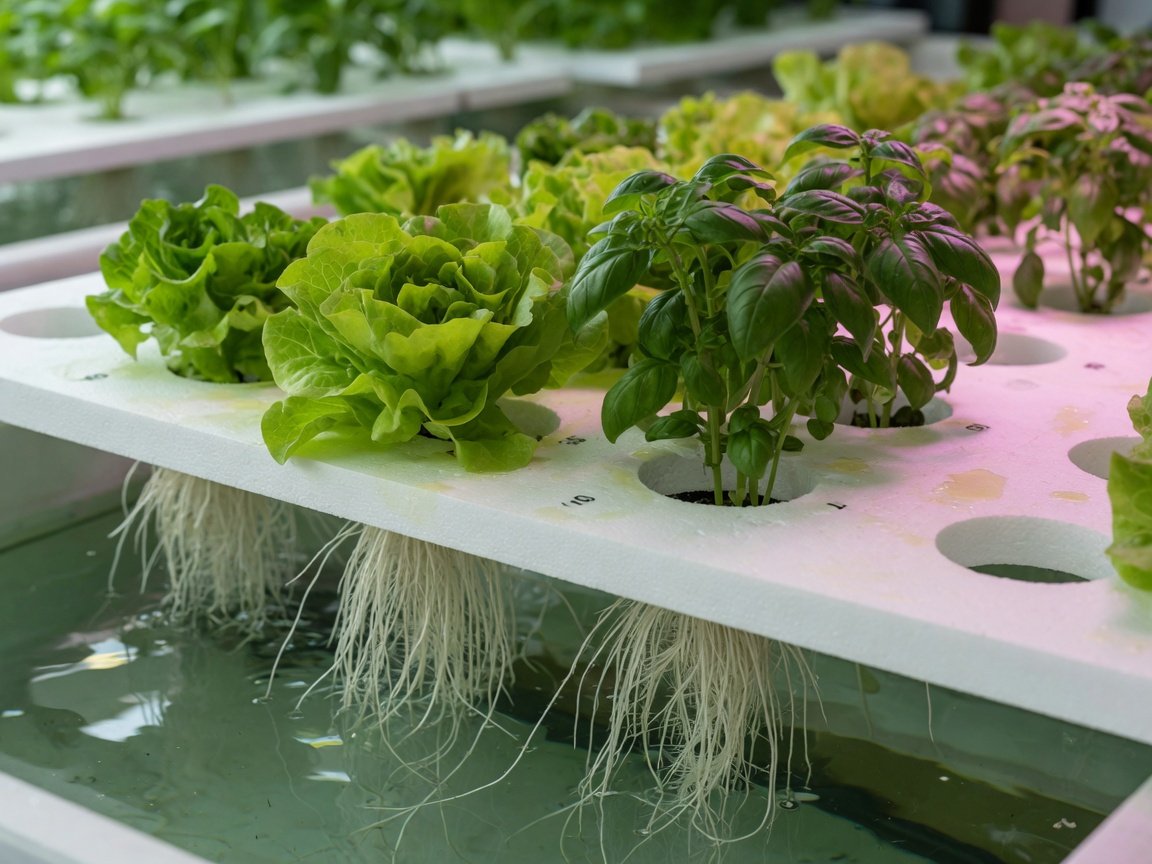
Herbs are among the most rewarding aquaponics crops for home growers. They produce almost continuously, command premium prices at markets, and most varieties are naturally suited to the nutrient profiles fish systems generate. Basil is the standout performer — heat-tolerant, moisture-loving, and vigorous at pH 5.5–6.5 and temperatures between 65–85°F. Studies comparing soil and aquaponic basil production show aquaponic plants yield up to 40% more biomass over an equivalent growing period. Basil needs at least 6–8 hours of strong light daily, so supplemental LED grow lights are a worthwhile investment for indoor setups.
Mint is almost aggressively productive in aquaponics — it spreads quickly and grows back rapidly after pruning, which is exactly the behaviour you want from a continuous-harvest herb. Watercress is one of the most ecologically fitting aquaponics crops available: as a semi-aquatic plant that naturally grows in flowing streams, it thrives in constant contact with water without any risk of root rot. Parsley, dill, chives, and coriander also adapt well. Parsley is a slow starter but produces abundantly for months once established. Dill and coriander are faster and suit NFT or raft systems well. Herbs pruned regularly — roughly every 2–3 weeks — can provide continuous harvests almost indefinitely, making them exceptional return-on-investment crops for any aquaponics setup.
“Herbs like basil and mint are ideal starter crops because they’re forgiving of minor pH fluctuations, they grow back quickly after cutting, and they give the grower fast, reliable feedback on whether the system is balanced and healthy.”
— Tom Halloran, aquaponics educator and system design consultant with over 12 years of hands-on growing experienceCan You Grow Fruiting Crops Like Tomatoes and Peppers in Aquaponics?
Yes — but fruiting crops are the graduate-level challenge of aquaponics. Tomatoes, peppers, cucumbers, and eggplant all grow successfully in aquaponic systems, but they demand more than leafy greens do. They need higher nutrient loads (particularly phosphorus and potassium), a fully cycled system with a well-established bacterial colony, and adequate physical support as plants grow tall and heavy with fruit. Introduce them too early into an under-cycled system and you’ll get yellowing, poor fruit set, and frustrated plants.
Tomatoes are the most popular fruiting aquaponics crop. In well-established media bed systems, they can yield 15–20 kg per plant per growing season — comparable to greenhouse soil production. They thrive at pH 5.5–6.5 and temperatures between 65–85°F. Indeterminate (vining) varieties outperform bush types because they produce continuously rather than in one flush. Cherry and grape tomatoes are particularly suitable for home systems because their lighter fruit weight reduces strain on support structures. Peppers prefer slightly cooler conditions (60–80°F) and reward good air circulation. Cucumbers are vigorous producers but need vertical support and active pollination management in enclosed systems. The quality of your fish population directly determines how nutrient-rich your water becomes for these heavy feeders — understanding how to choose the right fish for your aquaponics system is essential before committing to fruiting crops.
“Tomatoes in aquaponics reward patience. Growers who rush them into an under-cycled system will be disappointed. Give your biofilter 4–6 weeks to fully mature, build up your fish load gradually, and your plants will thank you with an outstanding harvest.”
— Dr. Priya Sharma, controlled environment agriculture specialist and aquaponics systems researcher📊 Case Study: Home Grower Media Bed System — 12-Month Results
- System: 1,200-litre media bed with 22 tilapia, 42 plant sites
- Lettuce yield: 8–10 kg per month from 20 dedicated plant sites
- Basil production: continuous harvest averaging 1.8 kg per week from 12 plants
- Tomato yield (introduced in month 4): 14 kg from 4 indeterminate plants in first full season
- Water usage: approximately 85% less than an equivalent soil bed
- Running costs: reduced by roughly 60% compared to the grower’s previous soil garden
What Vegetables Work Best in Media Bed Aquaponics?
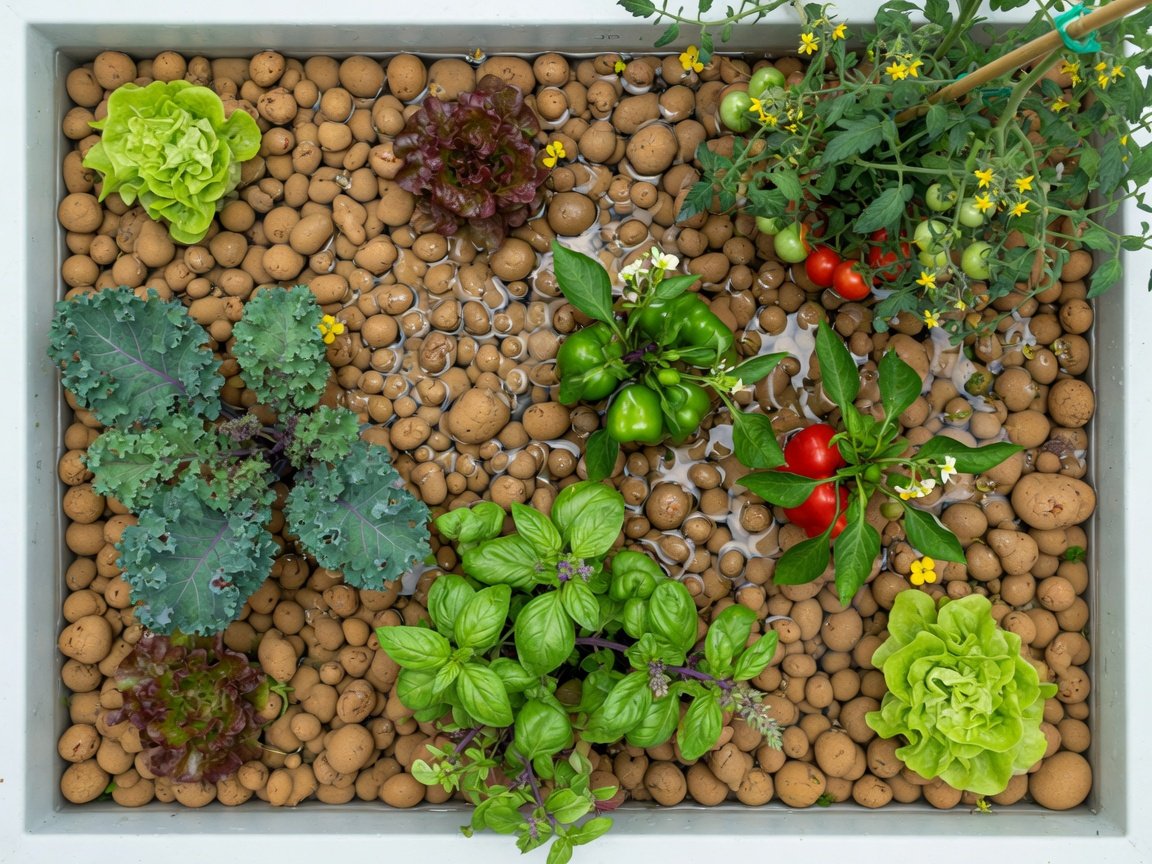
Media bed aquaponics — where plants grow in a substrate like clay pebbles, gravel, or expanded shale — is the most versatile system design for vegetable production. The physical support provided by the growing medium allows you to cultivate crops with heavier root structures that floating raft and NFT systems simply can’t accommodate. Beans and peas are outstanding media bed crops: they grow quickly, can fix additional atmospheric nitrogen to supplement your fish waste supply, and produce prolifically over a 10–12 week period.
Root vegetables like radishes, turnips, and small beet varieties can also succeed in deep media beds, though standard carrots need at least 12 inches of bed depth to develop properly. Ginger and turmeric are increasingly popular aquaponics crops — they grow slowly but are high-value, and the warm, consistently moist conditions of a media bed suit them well. Sage thrives in media beds due to its preference for well-drained but constantly moist roots. Cabbage and broccoli are possible in mature, heavily stocked systems but their higher nitrogen demands mean they perform better once you have a robust fish population established. The substrate you choose shapes everything from drainage rate to root oxygenation — learning how to choose the right aquaponics grow media for your specific crops is a step that pays dividends across every harvest cycle.
| Plant | Best System Type | Days to Harvest | Difficulty | Nutrient Demand |
|---|---|---|---|---|
| Lettuce | Raft / NFT | 28–35 | Beginner | Low |
| Basil | Raft / NFT / Media | 21–28 | Beginner | Low–Medium |
| Kale | Raft / NFT / Media | 35–42 | Beginner | Low |
| Swiss Chard | Raft / Media | 35–50 | Beginner | Low |
| Spinach | NFT / Raft | 30–40 | Beginner | Low |
| Watercress | Raft / Flow-through | 20–30 | Beginner | Low |
| Mint | Raft / NFT / Media | 30–40 | Beginner | Low |
| Beans | Media | 45–60 | Intermediate | Medium |
| Tomatoes | Media | 60–80 | Intermediate | High |
| Peppers | Media | 60–90 | Intermediate | Medium–High |
| Cucumbers | Media | 50–65 | Intermediate | High |
| Strawberries | NFT / Media | 90–120 | Intermediate | Medium |
| Radishes | Media (deep) | 22–30 | Beginner | Low |
| Ginger | Media | 120–180 | Intermediate | Medium |
Which Plants Are Ideal for Floating Raft (DWC) Systems?
Floating raft aquaponics — also called Deep Water Culture (DWC) — is the most widely used system for commercial leafy green and herb production. Plants are held in foam or polystyrene panels with their roots dangling into oxygenated, nutrient-rich water below. This arrangement is almost perfectly matched to the needs of fast-growing, shallow-rooted crops. Because roots have uninterrupted access to both water and nutrients, these plants rarely experience stress from inconsistent feeding, which is one reason their growth rate is so impressive compared to soil.
The best raft system crops are lettuce (all varieties), basil, kale, cabbage, mint, Swiss chard, and watercress. Strawberries are a rewarding surprise addition — they prefer slightly acidic conditions (pH 5.5–6.5) and produce reliably in a raft setup when given adequate light. NFT systems (where a thin film of nutrient water flows along channels) suit similar plants but with even less water volume per plant, making them exceptionally water-efficient. The key limitation of both raft and NFT systems is root support: top-heavy plants or those with deep anchoring root systems become unstable and are at risk of tipping. This is why neither system is the right choice for tomatoes or cucumbers. Understanding each system’s strengths before choosing your first setup is time well spent — a dedicated overview of the raft method covers everything from tank size to fish ratios in practical detail.
What Nutrient Levels Do Aquaponics Plants Actually Need?
Aquaponics plants don’t get their nutrients from a fertiliser bag — they rely on fish. That’s the elegance of the system, and also why understanding your plants’ nutrient requirements matters. Nitrogen (as nitrate) is the primary nutrient fish waste delivers. Most leafy greens grow well with nitrate levels of roughly 20–40 ppm (parts per million). Fruiting plants are hungrier: tomatoes and peppers perform best with nitrate in the 40–80 ppm range, which requires a higher fish stocking density to maintain naturally.
Phosphorus and potassium — the other two primary macronutrients — can become limiting factors over time, especially in systems with infrequent water top-ups. Calcium and iron are the most commonly deficient micronutrients. Iron deficiency shows as yellowing of young leaves while veins stay green — a reliable indicator that pH has drifted above 7.5, locking iron into a form plants can’t absorb. Keeping pH in the 6.8–7.2 range prevents most micronutrient shortfalls from developing. For a comprehensive look at diagnosing and correcting these issues before they affect your yield, the guide on preventing nutrient deficiencies in aquaponics plants is an excellent practical resource.
How Do You Start Plants in an Aquaponics System?
Getting plants established successfully is simpler than most beginners expect — but a few key steps make the difference between a thriving crop and a struggling one. The single most impactful tip: always use seedlings rather than direct-sowing seeds into the system. Seedlings begin extracting nutrients immediately; seeds germinate slowly and can be lost to fluctuating water conditions before they’re established. Here is a proven seven-step process for starting plants in 2026:
What Common Plant Problems Should You Watch For in Aquaponics?
Even well-managed aquaponics systems encounter plant health challenges. The good news: most problems have clear visual symptoms and predictable causes. Yellowing of older, lower leaves typically signals nitrogen deficiency — your fish load is too light for the number of plants you’re growing. Adding fish or temporarily reducing plant density resolves this in most cases within 7–14 days. Yellowing of young new leaves with green veins remaining is a classic iron deficiency symptom, usually caused by pH drifting above 7.5. Lower pH gradually — no more than 0.2 units per day — to restore iron availability.
Purple or reddish leaf undersides indicate phosphorus deficiency, which can develop in systems running at high nutrient throughput without sufficient water mineralisation. Addressing this requires either a small water change with mineralised water or careful introduction of a phosphorus supplement compatible with aquatic life. The in-depth guide on managing phosphorus deficiency in aquaponics plants walks through identification, causes, and correction in thorough detail. Wilting despite adequate water often points to root rot from poor oxygenation — check that your aeration system is functioning and that roots aren’t sitting in stagnant pockets. Pest pressure (aphids, whitefly, fungus gnats) is lower in aquaponics than in soil growing, but not zero. Neem oil spray and yellow sticky traps are fish-safe management tools that work well without disrupting your system chemistry.
Which Plants Work Best in Aquaponics During Winter?
One of aquaponics’ most compelling advantages over outdoor gardening is the potential to grow year-round. With an insulated or climate-controlled indoor system, winter becomes just another productive growing season. Cold-tolerant crops actually prefer the cooler temperatures of a winter system — kale, spinach, Swiss chard, bok choy, and cold-tolerant lettuce varieties all taste sweeter after mild cold exposure, a natural process called cold sweetening or vernalisation. Many experienced growers deliberately schedule these crops for winter cycles precisely because of the flavour improvement.
Herbs like parsley and chives handle lower temperatures reliably, making them dependable winter workhorses. Watercress is exceptional in winter — it naturally inhabits cool, fast-flowing streams and performs well at temperatures down to around 50°F without any drop in production quality. For growers running outdoor or semi-outdoor systems in temperate climates, a simple polytunnel or greenhouse covering can extend productive growing seasons by 4–6 weeks at both ends, and provide adequate crop protection through mild winters. Data from growers in northern Europe consistently shows that covered systems can maintain productive plant growth throughout winter months with only modest supplemental heating. For a full seasonal crop plan, the resource on the best winter plants for aquaponics is worth having to hand before the temperature starts to drop.
What Does the Future of Aquaponics Plant Selection Look Like in 2026–2027?
Aquaponics is evolving fast. The global aquaponics market is projected to exceed $1.8 billion by 2027, growing at roughly 14% annually as urban food production pressures and sustainability goals drive fresh investment. One of the clearest trends shaping plant selection in 2026 is the shift toward higher-value crops. Growers are moving beyond standard lettuce and basil toward speciality microgreens, edible flowers, heritage tomato varieties, and high-value medicinal herbs that command premium prices through direct-to-consumer and restaurant supply channels.
Smart sensor technology is a genuine game-changer for plant selection confidence. Affordable IoT water quality monitors now allow growers to track pH, dissolved oxygen, ammonia, and nitrates in real time via smartphone. This removes much of the guesswork from crop decisions — you can see immediately whether your system can support a heavier-feeding fruiting crop, or whether you need another cycle before introducing tomatoes. AI-driven advisory platforms are beginning to suggest crop rotations and planting schedules based on live system data, a development that makes high-performance aquaponics accessible to people who are new to the practice. Full-spectrum LED grow lights tuned specifically for aquaponic crops have also improved dramatically — today’s units deliver the optimal light spectrum for leafy greens and fruiting plants at a fraction of the energy cost of earlier generations, opening viable year-round indoor production in locations previously too dark for reliable yields. Vertical stacking — multiple grow layers above a single fish tank — is growing in popularity as growers seek to maximise production per square foot of floor space, particularly suited to compact, light-loving crops like lettuce, herbs, and microgreens.
“The convergence of precision water monitoring, AI crop planning, and expanding diversity in commercially viable aquaponics crops is pushing the practice from a niche interest into a serious food production method. By 2027, we expect far more plant diversity in established systems — and significantly better yields per square metre than we see today.”
— Dr. Rebecca Thorn, sustainable food systems researcher and aquaponics production consultantFrequently Asked Questions About the Best Plants for Aquaponics
What is the easiest plant to grow in aquaponics?
Lettuce is widely regarded as the easiest aquaponics plant for beginners. It has low nutrient demands, tolerates minor pH fluctuations, and can be harvested in as little as 28–35 days. It performs well in raft, NFT, and media bed systems, making it suitable for virtually any aquaponics setup. Basil and kale are equally beginner-friendly choices if you want to diversify from the start.
Can I grow root vegetables in aquaponics?
Yes, but with conditions. Small root vegetables like radishes, baby beets, and turnips grow well in deep media beds. Standard carrots need a bed depth of at least 30 cm (12 inches) to develop properly. Root vegetables are not suitable for raft or NFT systems, as they need the physical support and depth that a substrate-based media bed provides. Radishes are the most beginner-friendly root crop, reaching harvest in as little as 22–30 days.
How many plants can I grow per fish in an aquaponics system?
A commonly used guideline is to stock roughly 0.5 kg of fish for every square foot of grow bed area. For leafy greens and herbs, this fish-to-plant ratio provides more than enough nutrients. Fruiting plants like tomatoes require a higher fish density — closer to 1 kg of fish per square foot of bed — because they consume significantly more nitrogen and potassium. These ratios depend on your system type, fish species, and feeding rate, so treat them as starting points rather than fixed rules.
Do aquaponics plants need additional nutrients beyond what fish provide?
Most leafy greens and herbs thrive on fish waste alone. Fruiting crops, however, often benefit from occasional supplementation of potassium, calcium, and iron — particularly in mature systems where certain minerals have been depleted over time. Calcium can be added through food-grade calcium carbonate; chelated iron is the most plant-available iron supplement safe for aquatic environments. Always check that any supplement you add is aquaculture-safe and won’t harm your fish or your bacterial colony.
How long do I need to wait before adding plants to a new aquaponics system?
Wait until your system has fully cycled — typically 4–6 weeks from startup. You’ll know the cycle is complete when ammonia reads near 0 ppm, nitrite reads near 0 ppm, and nitrates are measurably present (usually 20 ppm or above). Adding plants to an uncycled system exposes them to toxic ammonia and nitrite spikes that can stunt or kill them. Leafy greens can be introduced as soon as the cycle completes; wait an additional 4–6 weeks before adding fruiting crops.
Can you grow strawberries in aquaponics?
Yes — strawberries grow successfully in both NFT channels and media beds. They prefer slightly acidic conditions (pH 5.5–6.5) and need good light intensity, which often means supplemental LED lighting in indoor systems. They take longer to produce than leafy greens — typically 90–120 days from transplant — but the harvest quality is excellent. Everbearing varieties tend to perform better in aquaponics than June-bearing types, as they produce fruit continuously rather than in a single large flush.
What plants should I avoid in aquaponics?
A few plants consistently underperform or cause problems in aquaponics. Large root vegetables like standard carrots and parsnips need more depth than most systems provide. Plants with very high water pH preferences — like asparagus (prefers pH 6.5–7.5 but needs specific soil conditions) — are difficult to manage alongside fish. Corn requires very high nitrogen levels and takes up considerable space relative to yield. Most large brassicas (full-size broccoli, cauliflower) are heavy feeders better suited to mature, heavily stocked systems than to beginner setups.
Getting Started: Your Aquaponics Plant Action Plan
The best aquaponics systems in 2026 share one thing in common: plant selection that matches the system’s design, the fish load, and the grower’s experience level. Start where the evidence points — lettuce, kale, basil, and mint — and build from there. Add fruiting crops once you’ve got two or three successful leafy green harvests under your belt and your system chemistry is stable. Follow this simple sequence to get going:
- Weeks 1–6: Cycle your system fully. No plants until ammonia and nitrite hit zero.
- Week 6–8: Transplant your first batch of lettuce, basil, and kale seedlings. Monitor pH every 2–3 days.
- Week 8–12: Add a second variety rotation. Trial spinach, Swiss chard, or watercress alongside your first crops.
- Month 3–4: Introduce herbs like parsley and mint. Evaluate your system’s nitrate levels before deciding on fruiting crops.
- Month 4–6: If nitrates are consistently above 40 ppm and fish are healthy, transplant cherry tomato or pepper seedlings into a dedicated media bed zone.
- Ongoing: Stagger plantings every 1–2 weeks, prune herbs regularly, and test water parameters weekly to keep your system in balance.
Essential Resources for Aquaponics Plant Growers
- pH testing kit or digital probe — weekly testing is non-negotiable for plant health
- Ammonia, nitrite, and nitrate test kit — the API Freshwater Master Test Kit is a widely trusted option
- Rockwool or rapid rooter plugs — for clean, consistent seed germination away from the main system
- Full-spectrum LED grow lights — essential for indoor systems and winter growing
- pH Up and pH Down solutions — potassium hydroxide (pH Up) and phosphoric acid (pH Down) are aquaculture-safe choices
- Chelated iron supplement — keep on hand for iron deficiency correction without harming fish
Aquaponics rewards the growers who observe closely, adjust patiently, and let the system guide their decisions. Start simple, build knowledge with every harvest, and by the end of your first full growing year you’ll have a system — and a crop selection — that’s genuinely your own.