A healthy colony of 50 freshwater shrimp can sustain a full grow bed of leafy greens in a balanced aquaponics system — and a well-chosen species will double that population within four months without extra intervention. This guide walks you through every practical step: choosing the right shrimp, setting up your tank, managing water quality, and harvesting when the time comes.
Key takeaways from this guide:
- Freshwater shrimp thrive in aquaponics when water temperature stays between 65–78°F and pH holds steady at 6.5–7.5
- Red Cherry Shrimp are the top beginner species — they breed readily, tolerate a wide pH range, and cost as little as $1–2 per animal
- A 40-gallon system can support 80–150 adult shrimp while producing a continuous harvest of leafy greens and herbs
- Shrimp act as a built-in cleanup crew — grazing biofilm, algae, and organic debris that would otherwise accumulate on tank surfaces
What Makes Shrimp Such a Smart Choice for Aquaponics?
Shrimp punch well above their weight in an aquaponics system. Unlike fish, which produce waste as a byproduct of your production goals, shrimp actively contribute to system hygiene while they grow. They graze continuously on biofilm — the thin layer of bacteria, algae, and organic matter that coats every submerged surface — reducing the load on your mechanical filtration and improving water clarity in the process.
From a sustainability standpoint, aquaponics shrimp farming is dramatically more efficient than conventional methods. Traditional shrimp pond aquaculture consumes vast quantities of fresh water and frequently discharges nutrient-rich effluent into surrounding waterways. A recirculating aquaponics system reuses the same water continuously — research consistently shows that aquaponics operations use up to 90% less water than soil-based or pond-based alternatives. That advantage becomes more significant every year as freshwater access tightens globally.
Shrimp also reproduce quickly once conditions are right. A balanced system with adequate food and stable parameters supports continuous breeding without any special triggers. Experienced aquaponics growers report that a starter colony of 20–30 shrimp can realistically grow to 150–200 individuals within six months under consistent management — a self-sustaining protein source that largely looks after itself once it’s established.
Which Shrimp Species Work Best in an Aquaponics System?
The most important decision you’ll make when starting a shrimp aquaponics system is species selection. Saltwater species like Pacific White Shrimp (Litopenaeus vannamei) dominate commercial shrimp farming globally, but they require saline water that most aquaponics plants can’t tolerate. For home and small-scale commercial growers, freshwater species are the practical and proven choice. Here are the four that consistently perform best.
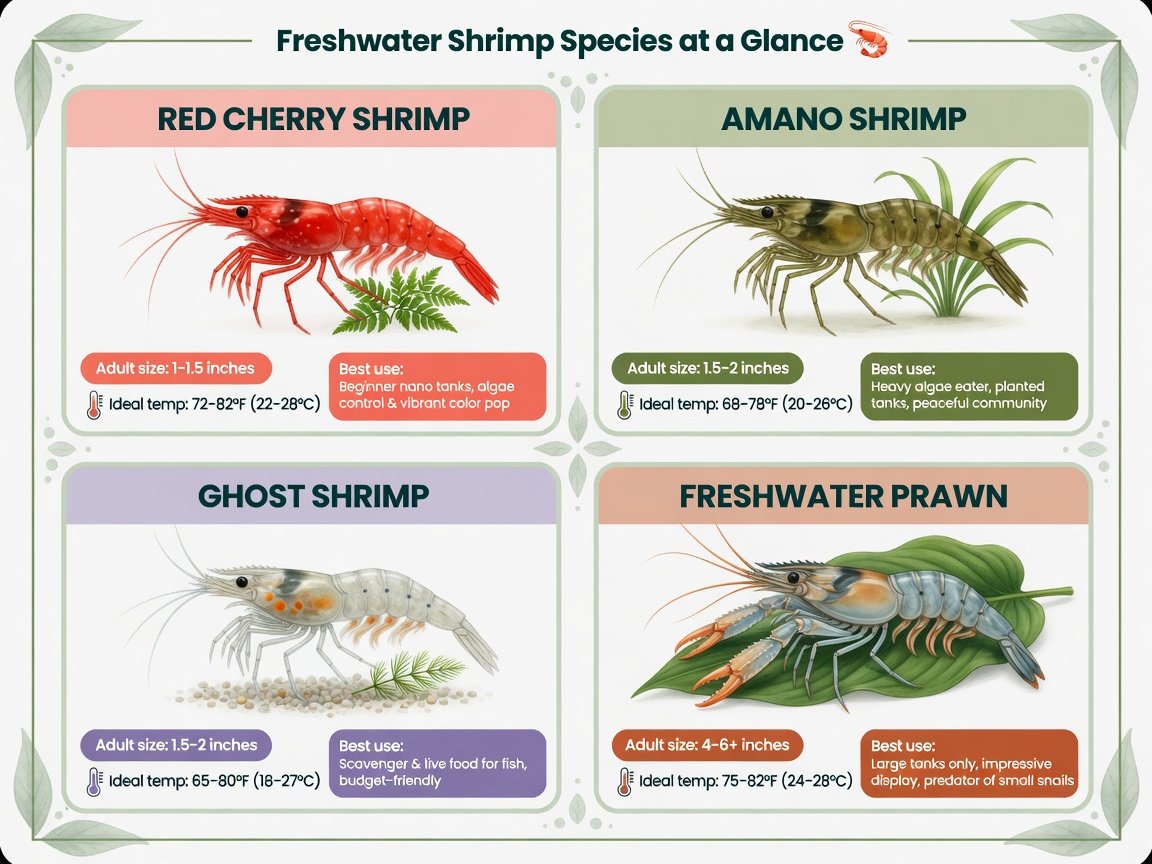
Red Cherry Shrimp (Neocaridina davidi)
Red Cherry Shrimp are the default recommendation for beginners — and for good reason. They’re among the hardiest freshwater shrimp available, tolerating a broader pH range (6.5–7.5) and temperature window (65–77°F / 18–25°C) than most alternatives. They breed in freshwater without any special conditions, carrying 20–30 eggs per clutch, and shrimplets emerge as fully formed miniatures with no larval stage. That means no separate breeding setup, no brackish water adjustments, and a self-sustaining population that grows with minimal intervention. For a broader look at how freshwater shrimp varieties compare in practice, this complete freshwater shrimp aquaponics guide covers the full range of species in depth.
Amano Shrimp (Caridina multidentata)
Amano shrimp are the algae-eating champions of the freshwater aquarium world. They consume more algae per individual than almost any other freshwater shrimp, making them valuable in systems where algae overgrowth is a recurring problem. They grow to around 1.5–2 inches and tolerate temperatures as low as 60°F (15°C), which suits unheated or cooler setups. The key limitation is that they don’t breed in freshwater — larvae require brackish conditions to survive — so you’ll need to restock periodically rather than relying on natural population growth.
Ghost Shrimp (Palaemonetes paludosus)
Ghost Shrimp are the budget option. They’re sold as feeder animals in most aquarium shops for as little as $0.25–0.50 each, breed readily in freshwater, and are genuinely hardy. Their transparent bodies make it easy to spot health issues and internal egg development at a glance. The main limitation is size — they reach about 1.5 inches at maturity — which limits their value as a food crop. They work best as tank cleaners in a mixed system where fish are your primary harvest, or as a low-cost introduction to shrimp management before investing in more expensive species.
Freshwater Prawns (Macrobrachium rosenbergii)
If substantial food production is the goal, Freshwater Prawns deliver. They reach 6–8 inches at maturity and are farmed commercially for food across Southeast Asia and parts of the Americas. The trade-off is management complexity. Males are territorial and will fight — population density needs careful control. Water temperature must stay between 77–86°F (25–30°C), making them best suited to warm climates or climate-controlled indoor systems. Target harvest weight of 30–50 grams per animal is typically reached at 6–9 months from juvenile stocking at optimal temperatures.
| Species | Adult Size | Ideal Temp | Breeds in Freshwater? | Best For |
|---|---|---|---|---|
| Red Cherry Shrimp | 1–1.5 in | 65–77°F | Yes | Beginners, self-sustaining colonies |
| Amano Shrimp | 1.5–2 in | 60–78°F | No | Algae control |
| Ghost Shrimp | 1–1.5 in | 65–80°F | Yes | Budget builds, tank cleaning |
| Freshwater Prawn | 6–8 in | 77–86°F | Yes (complex larvae) | Food production, larger systems |
How Do You Set Up a Tank for Aquaponics Shrimp?
Getting the physical setup right before adding any animals is the single most important thing you can do to avoid early losses. Shrimp are sensitive to their environment in ways that many fish aren’t — they can’t retreat to a different corner of the tank when conditions deteriorate, and they die faster than fish when something goes wrong.
Tank size: Start with at least 20 gallons. Smaller tanks are harder to keep stable — temperature swings, pH shifts, and ammonia spikes move faster in lower water volumes. A 40-gallon tank is a practical working size that supports 80–150 adult shrimp alongside a productive grow bed without requiring constant micro-management.
Filtration: Shrimp are small enough to be sucked into standard aquarium filter intakes. Use a sponge filter, or fit a pre-filter sponge over any intake on your system. Sponge filters also provide surface area for beneficial bacteria to colonise, directly supporting your nitrogen cycle. Aquaponics specialists advise against powerful powerheads in shrimp tanks — shrimp prefer calm water with gentle, even circulation rather than strong directional currents.
Substrate and cover: Expanded clay pebbles (hydroton), river gravel, and lava rock all work well as shrimp substrates — they provide biofilm surface area and support plant roots. Add Java Moss; shrimp love picking through it for food and use it as shelter during molts. Dense plant coverage also reduces aggression in higher-density systems. If you’re building from scratch on a budget, a low-cost IBC tote aquaponics build is one of the most popular and scalable starting points for shrimp and plant production together.
Cycling: Never add shrimp to an uncycled tank. The nitrogen cycle — where beneficial bacteria convert toxic ammonia to less harmful nitrates — must be fully established first. This typically takes 4–6 weeks. Test daily until ammonia and nitrite both hold at 0 ppm and nitrates are detectable. Only then is the system ready for animals. For a thorough walkthrough of all the variables involved, this guide to the key considerations for setting up an aquaponics system covers cycling, filtration sizing, and stocking timelines in practical detail.
What Water Parameters Do Shrimp Need to Survive and Thrive?
Water quality is where most shrimp losses happen. Shrimp have a narrower tolerance window than most aquaponics fish — their respiratory surfaces are in direct contact with the surrounding water, meaning a parameter spike that a robust species like tilapia might weather without visible harm can kill an entire shrimp colony within hours.
Target these parameters for the most common freshwater aquaponics species:
- Temperature: 65–78°F (18–26°C) for most freshwater species
- pH: 6.5–7.5 — shrimp are more sensitive to pH swings than fish; stability matters as much as the target number
- Ammonia: 0 ppm — any detectable ammonia is a problem
- Nitrite: 0 ppm — toxic to shrimp even at very low levels
- Nitrate: Below 20 ppm — in a healthy plant-loaded system, plants usually absorb nitrates before they reach this threshold
- General Hardness (GH): 4–8 dGH — shrimp need dissolved minerals to form healthy new exoskeletons during molts
- Carbonate Hardness (KH): 2–5 dKH — buffers pH against sudden swings
- Dissolved oxygen: Above 6 mg/L — add an air stone if surface agitation from your pump isn’t sufficient
Test twice a week with a liquid test kit — strips are less accurate and can give false reassurance. During the first two months after adding shrimp, test every 2–3 days. Shrimp molt as they grow, shedding their entire exoskeleton every few weeks, and they’re most vulnerable for the 24–48 hours immediately after a molt. A sudden parameter shift during this window can be fatal. Adding a small piece of cuttlebone to your tank provides a passive calcium supplement and helps maintain GH, particularly in soft-water areas.
How Does the Nitrogen Cycle Affect Your Shrimp?
The nitrogen cycle is the biological engine that makes aquaponics possible. Shrimp and fish excrete ammonia, which is highly toxic. Beneficial bacteria — primarily Nitrosomonas species — convert ammonia to nitrite, which is also toxic. A second bacterial group, Nitrobacter, converts nitrite to nitrate, which your plants absorb as fertiliser. Clean, filtered water returns to the tank. Understanding this process isn’t just academic — it directly determines whether your shrimp survive their first month.
Shrimp are acutely sensitive to ammonia and nitrite because their gills absorb dissolved compounds directly from the water around them. A toxic spike that a large, robust fish might survive will kill shrimp in hours. This is why a fully established nitrogen cycle — not a partially cycled system — is the non-negotiable baseline before you add any animals. To understand how to nurture your bacterial colonies before stocking, this explainer on the role bacteria play in an aquaponics system goes deeper on the microbiology behind the cycle.
Shrimp also contribute positively to the system’s ecology. Their grazing behaviour stirs up settled detritus, making organic matter more available for bacterial breakdown. Their waste adds to the nutrient stream that feeds your plants. Adding composting worms to your grow beds further accelerates this loop by converting solid waste into plant-available nutrients faster than bacteria alone can manage. The surprising benefits of worms in aquaponics are worth exploring before you finalise your setup design — the combination of worms, bacteria, and shrimp creates a genuinely resilient nutrient cycle.
How Do You Feed Shrimp in an Aquaponics System?
One of the genuine advantages of keeping shrimp in aquaponics is that a healthy, established system does much of the feeding work automatically. Biofilm — the thin layer of bacteria, microalgae, and decomposing organic matter that develops on every submerged surface — is the primary natural food source for most freshwater shrimp. A well-run aquaponics system generates biofilm continuously, which means your shrimp are grazing almost around the clock without any input from you.
Supplemental feeding accelerates growth rates and supports breeding. Effective options include:
- Blanched vegetables: Zucchini, cucumber, spinach, and kale are popular choices. Blanching softens cell walls so shrimp can graze effectively. Remove uneaten pieces after 24 hours to prevent water fouling.
- Spirulina wafers or powder: A high-protein algae supplement that supports breeding females and enhances colour in ornamental species. Use small amounts — a little goes a long way.
- Sinking shrimp pellets: Formulated with the minerals shrimp need for healthy molts. Three to four pellets per 20 shrimp every other day is a reasonable starting point.
- Leaf litter: Indian almond leaves and mulberry leaves decompose slowly in the tank, creating a biofilm-rich surface that shrimp will pick through for days. They also release tannins that mildly acidify the water and offer some antimicrobial benefit.
Feed once daily or every other day, and watch how quickly food disappears. If pellets sit uneaten for more than a few hours, reduce the amount. Overfeeding is a more common problem than underfeeding in a biofilm-rich system — decomposing food spikes ammonia, which is the exact parameter you’re working hardest to control.
How Do You Breed Shrimp in an Aquaponics System?
Breeding shrimp in aquaponics is largely a matter of getting the conditions right and then stepping back. Unlike fish, which often need specific seasonal cues, spawning substrates, or carefully timed triggers, most freshwater shrimp breed readily once tank parameters are stable and both sexes are present in the tank.
Here’s what the breeding cycle looks like in practice:
- Sexing: Females are noticeably larger and rounder in the abdomen, with a curved underside. Look for a “saddle” — a patch of developing eggs visible through the shell just behind the head. Males are slimmer and smaller.
- Mating: When a female molts and releases pheromones, males become hyperactive and swim rapidly through the tank searching for her. This brief period of frantic movement is entirely normal — don’t mistake it for stress behaviour.
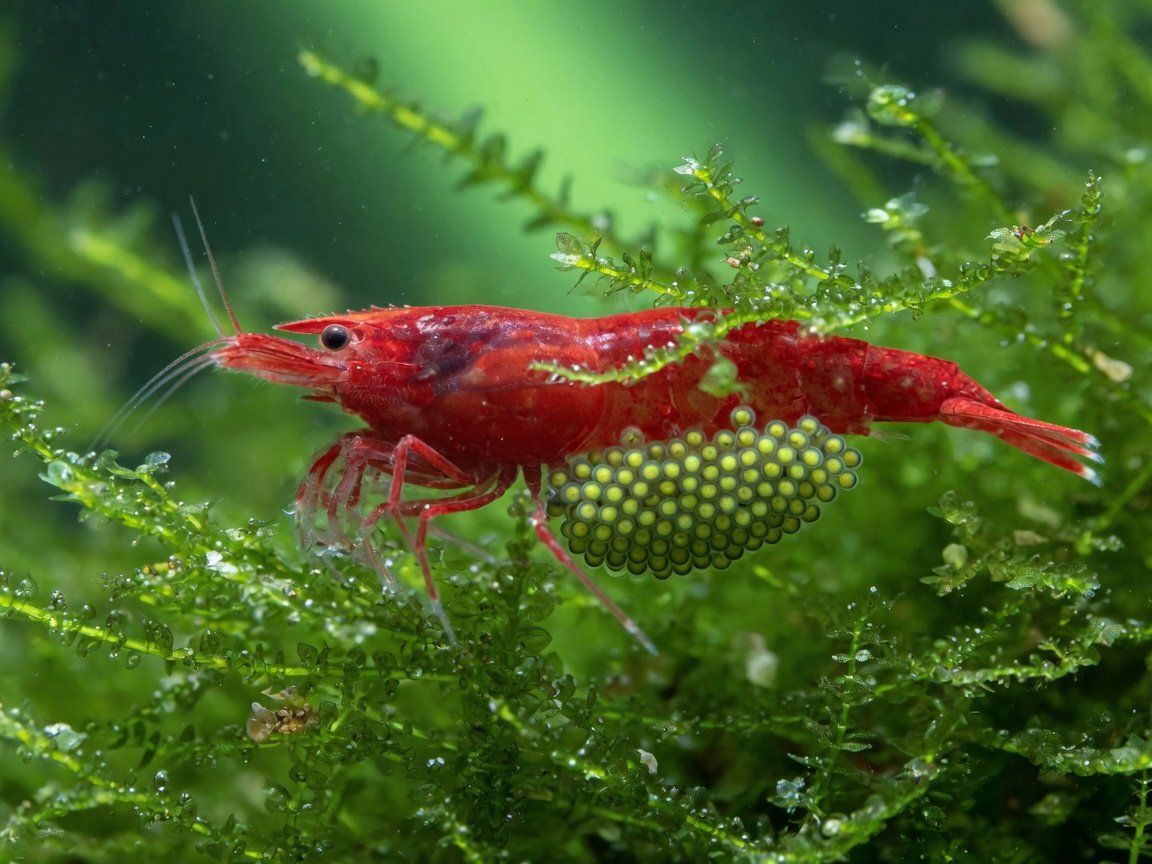
- Egg development: After mating, the female carries fertilised eggs under her abdomen for 25–35 days, fanning them regularly with her swimmerets to keep them oxygenated. A “berried” female — one visibly carrying a cluster of eggs — is one of the most reliable signs that your system conditions are good.
- Shrimplets: Young shrimp emerge as miniature adults — no free-swimming larval stage for most freshwater species. They’re tiny (1–2 mm) and need dense cover to avoid predation. In a shrimp-only tank with plenty of moss and plant material, survival rates are high. In a mixed tank with fish, expect most shrimplets to be eaten.
Red Cherry Shrimp typically reach sexual maturity at 3–4 months. A balanced colony with a roughly equal sex ratio breeds reliably once mature, and population growth becomes self-sustaining thereafter. When sizing your tank, plan for a mature population three to five times your initial stocking number within the first year.
When and How Do You Harvest Your Shrimp?
Harvesting is where raising shrimp in aquaponics diverges most clearly from purely ornamental shrimp keeping. For food production, the goal is to keep the population within the system’s carrying capacity — too many shrimp generate too much waste, overwhelming your bacterial filtration and triggering the water quality crashes you’ve worked hard to prevent.
For small freshwater species like Red Cherry Shrimp, harvest when the tank looks visibly crowded — when animals are competing noticeably for food or the substrate is densely packed during feeding. Use a fine mesh net to collect adults from the tank floor early in the morning, before feeding, when shrimp are most active at substrate level. Remove no more than 20–30% of the adult population at a single harvest to avoid disrupting colony structure and breeding continuity.
For Freshwater Prawns raised as a primary food crop, harvest when animals reach your target market weight — typically 30–50 grams per animal — which occurs at roughly 6–9 months from juvenile stocking at optimal water temperatures. Net the entire tank at harvest, separate by size, and return undersized animals to the system for another growth cycle.
Refrigerate harvested shrimp immediately and process within 24 hours for peak quality. Live shrimp can be transported briefly in aerated coolers if you’re selling to local restaurants or direct buyers — live product commands a consistent premium over frozen in most local markets.
What Are the Most Common Shrimp Aquaponics Problems — and How Do You Fix Them?
Even well-managed systems hit problems. Here are the issues aquaponics shrimp growers encounter most often, and the fastest practical fixes for each.
Sudden Shrimp Deaths (Colony Crash)
A crash — multiple deaths in a short period — almost always traces back to water quality. Test immediately for ammonia, nitrite, pH, and temperature. A 20–30% water change with dechlorinated water at the same temperature can stabilise the tank while you identify the root cause. Common culprits include overfeeding, a dead animal decomposing unseen in the tank, or a recently introduced chemical — fertiliser spray drift, chlorinated tap water used for a water change, or a new decoration that wasn’t properly rinsed before going in.
Failed Molts
Shrimp found dead with part of their old exoskeleton still attached have failed during molting — a common sign of mineral deficiency. Add cuttlebone or crushed coral to raise GH, and verify that your water’s mineral content falls within the 4–8 dGH target. Some growers add a small amount of mineral-rich spring water during water changes to maintain GH in soft-water areas. Sudden pH swings can also trigger failed molts, so stability across the week is as important as hitting the right number.
No Breeding Activity
If your colony isn’t growing, first confirm that you have both males and females present, then verify water parameters — particularly temperature — are within the species’ preferred breeding range. Stress from predators, aggressive tank mates, or insufficient hiding spots suppresses breeding reliably. Increasing Java Moss coverage and adding more plant material almost always produces visible results within a few weeks. If you made significant parameter changes recently, give the colony 4–6 weeks to settle before drawing any conclusions.
Algae Overgrowth
Some algae in a shrimp system is a feature, not a problem — it’s a food source. Heavy algae carpeting your tank walls or clogging your grow media indicates excess nutrients or too much light. Reduce your photoperiod to 8 hours, cut back supplemental feeding, and check whether your plant uptake is keeping pace with nutrient input. Adding a small group of Amano shrimp to a system overrun with thread algae produces visible improvement within a week in most cases.
How Much Does a Shrimp Aquaponics System Cost?
Startup costs depend heavily on scale. A basic home system suitable for Red Cherry Shrimp — a 40-gallon aquarium, sponge filter, grow lights, expanded clay media, and a simple flood-and-drain grow bed — can be assembled for $150–$400, depending on whether you buy new or source second-hand equipment. Larger systems with climate control and dedicated grow rooms can run into the thousands.
Ongoing running costs are modest. Shrimp eat less than fish, require minimal heating in temperate climates for most beginner species, and support high stocking densities per gallon. A starter colony of 30 Red Cherry Shrimp typically costs $20–$60 from a reputable breeder. For a detailed breakdown of what complete builds actually cost at different scales — from backyard hobby setups to small commercial operations — this aquaponics system cost guide provides itemised figures that help you plan your budget realistically before you buy anything.
Return on investment is driven largely by what you grow alongside the shrimp. Fast-growing crops like lettuce, basil, and spinach can go from transplant to harvest in 4–6 weeks in a shrimp-fed system. Combined produce and shrimp sales from a well-run 100-gallon setup can realistically recover build costs within a single growing season for growers selling direct to local buyers or at farmers’ markets.
Frequently Asked Questions About Raising Shrimp in Aquaponics
Can shrimp live with fish in an aquaponics system?
Yes, but you need to choose compatible tank mates carefully. Small, non-aggressive fish — tetras, guppies, small corydoras catfish — can coexist peacefully with adult shrimp. Larger fish like tilapia, bass, or carp will eat shrimp on sight, especially juveniles and shrimplets. If you want a self-sustaining breeding colony, keep shrimp in a dedicated tank or pair them only with fish too small to prey on adult animals.
How many shrimp can I add per gallon?
For small freshwater species like Red Cherry Shrimp, a guideline of 5–10 animals per gallon works well in a fully cycled, plant-loaded system. A 40-gallon tank can sustain 200–400 adults at carrying capacity, though stocking conservatively and allowing the population to grow naturally produces more stable results than loading the tank to maximum density from the start. Freshwater Prawns need considerably more space — no more than 3–4 per 10 gallons to prevent territorial fights between males.
Do I need to heat my shrimp tank?
It depends on your climate and species. Red Cherry Shrimp and Ghost Shrimp are comfortable at typical household room temperatures — usually 68–72°F year-round in temperate climates. If your ambient temperature drops below 60°F in winter, a small submersible heater set to 70°F is inexpensive insurance. Freshwater Prawns, which need 77–86°F to grow and breed effectively, will almost certainly require active heating in any temperate climate regardless of season.
Can I use tap water for my shrimp aquaponics system?
Yes, provided you dechlorinate it first. Chlorine and chloramine — standard municipal water disinfectants — are directly toxic to shrimp and to the beneficial bacteria your nitrogen cycle depends on. Use a dechlorinator and let treated water sit for 30 minutes before adding it to the tank. If your tap water has unusually high or low mineral content, check your water utility’s published figures and adjust GH and KH accordingly before performing water changes.
How long does it take for a shrimp colony to establish itself?
Allow 3–6 months for a new colony to reach stable, self-sustaining numbers. The first 2–3 months typically involve some natural losses as weaker animals die off and survivors adapt to your system’s specific chemistry. By month 4–5 in a consistently managed tank, breeding should be regular and population growth steady. Avoid making significant parameter changes during this establishment window — stability is more valuable than chasing perfect numbers on the test kit.
What plants grow best alongside shrimp in aquaponics?
Leafy greens and herbs are ideal companions for shrimp-based aquaponics. Lettuce, spinach, kale, watercress, and basil all perform reliably with the nutrient load a shrimp colony produces. Shrimp systems typically generate slightly lower nutrient output than fish-based systems, so heavily feeding fruiting plants like tomatoes or peppers may underperform unless you have a very densely stocked tank. Stick to fast-growing greens and herbs for the most consistent harvests, especially in your first year.
Getting Started: Your First 30 Days
Raising shrimp in aquaponics is one of the most rewarding additions you can make to a system — they’re endlessly watchable, genuinely useful as tank cleaners, and capable of producing a meaningful protein harvest once the colony is established. Almost all the real challenge lives in the setup phase. Once you’re past the cycling period and the first few weeks after stocking, the system finds its own rhythm.
- Week 1: Set up your tank with substrate, filtration, and plants. Begin cycling by adding a small ammonia source — a pinch of fish food or a measured dose of pure ammonia works well.
- Weeks 2–3: Test daily. Ammonia will spike first, then fall as Nitrosomonas bacteria establish. Nitrite rises next, then falls as Nitrobacter colonies grow. Nitrates will begin to accumulate as your plants take over.
- Week 4: Once ammonia and nitrite both hold at 0 ppm and nitrates are detectable, your cycle is complete. Float your shrimp bag in the tank for 20 minutes, then drip-acclimate over 60–90 minutes before releasing them — never drop them straight in.
- Months 2–3: Feed lightly every other day. Test water twice weekly. Watch for berried females as the first reliable sign that your colony is settling into its new environment.
- Months 4–6: Population growth becomes visible. Begin harvesting surplus adults when the tank looks crowded, and expand your plant variety as the nutrient load grows with the colony.
Start small, stay patient, and trust the biology. A shrimp aquaponics system that’s been running for six months rarely resembles the intimidating project it seemed at the start — and the fresh produce and protein it produces make every week of the setup process genuinely worth it.