I’ve built a few backyard aquaponics setups and I’ll be frank: it’s part science, part art—like tuning a small orchestra in your yard. I’ll walk you through layout, sunlight, tank and bed sizing, and how to make it look good. Maybe I’m biased, but I think anyone can grow most of their veg this way. Want to know the one sizing mistake people always make—and how to avoid it?
What Is Backyard Aquaponics and Why It Works
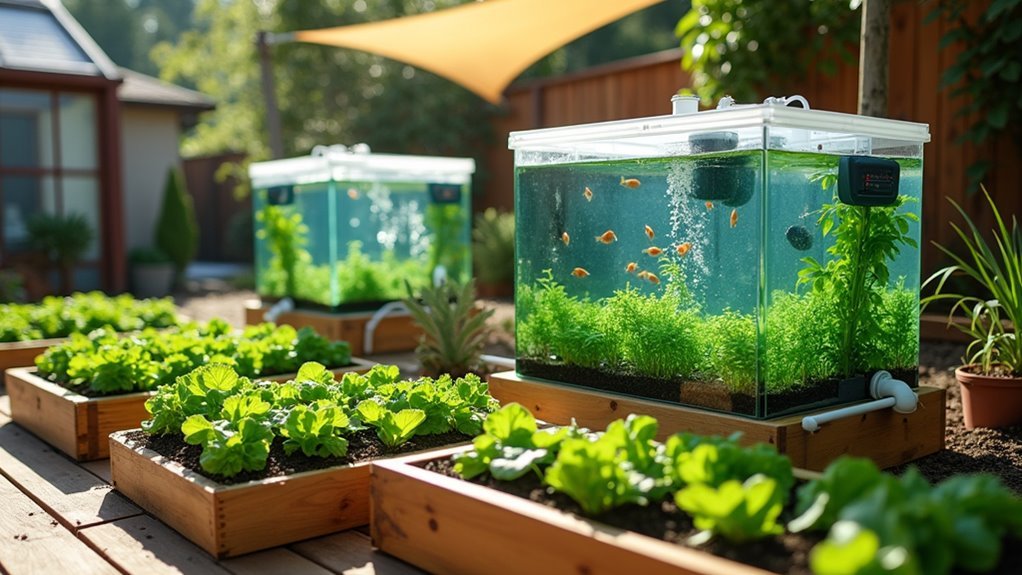
If you’ve ever thought about growing food but hated hauling bags of soil, backyard aquaponics might be the thing for you.
I started with curiosity about Aquaponics history and was hooked by the simple science: fish produce waste, microbes convert it, plants eat the nutrients, and clean water returns. It’s a tiny closed-loop ecosystem in my yard — no, in your yard.
Curiosity led me to aquaponics: fish waste, microbes, plants — a tiny backyard closed-loop
I think it’s elegant; like a living machine. You can use media beds, NFT trays, or raft setups to fit spaces and boost nutrient uptake.
In my experience it saves tons of water — up to ninety percent versus regular gardens — and offers real community benefits when neighbors share produce or know-how.
Maybe it’s not magic, but it feels close, indeed.
Choosing materials like food-grade PVC can influence system safety.
Planning Your Layout: Sunlight, Water Access, and Drainage
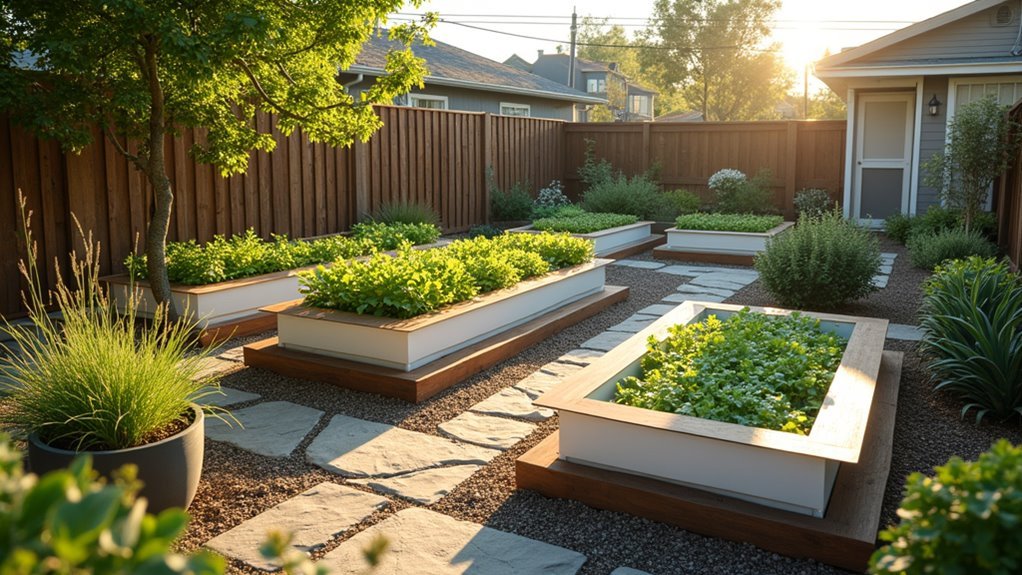
I always start by mapping sunlight and shade across the yard—plants need about 6–8 hours of direct sun, and I think marking spots at different times of day makes that obvious.
Next, I check how close a reliable water source and a good drainage path are, because filling, topping, and cleaning will be a pain if pumps, outlets, or a sloped site aren’t planned for.
Maybe I’m overthinking it — imagine your system like a small pond that needs both sun and a sink; I’m not entirely sure, but getting those basics right saves headaches later.
Remember to prioritize sunlight exposure by locating the system where it can receive direct sun for at least six hours daily.
Sunlight and Shade Mapping
Because sunlight is the fuel for your plants, mapping its path across the yard is the first thing I do when planning an aquaponics layout. I use Sunlight mapping and Shade planning together: walk the yard at dawn, noon, dusk; note 6–8 hours zones. I’ll use a light meter or app to log intensity—it’s surprisingly precise. Trees and fences cast predictable patches. I prefer shade cloth or a pergola for hot afternoons; protects plants and fish, though maybe you don’t always need it. Below is a quick note table to keep me honest.
| Area | Notes |
|---|---|
| Full sun | 6–8 hrs — best for vegetables |
| Partial shade | Protect tender plants; consider cloth |
Sometimes I’ll check again, because conditions change. I’m not entirely sure, but I adjust seasonally.
Water Supply and Drainage
Now that you’ve mapped sun and shade, water becomes the next thing I look at — it’s the lifeblood of the whole setup, like arteries running through a body.
I position tanks near a garden tap or planned rainwater harvesting barrel so filling and topping up isn’t a chore. You want accessible outlets for testing, flushing, and cleaning; trust me, you’ll thank me later.
Drainage slopes must carry overflow away from beds and foundations — prevent waterlogging and rot.
I like to plan for simple water filtration before it hits fish tanks; it keeps things stable.
Shade or reflective covers help regulate tank temps during hot afternoons.
Maybe I’m picky, but proper access and drainage save headaches and reduce maintenance time, honestly a lot.
Sizing Tanks, Grow Beds, and Equipment for Family Needs
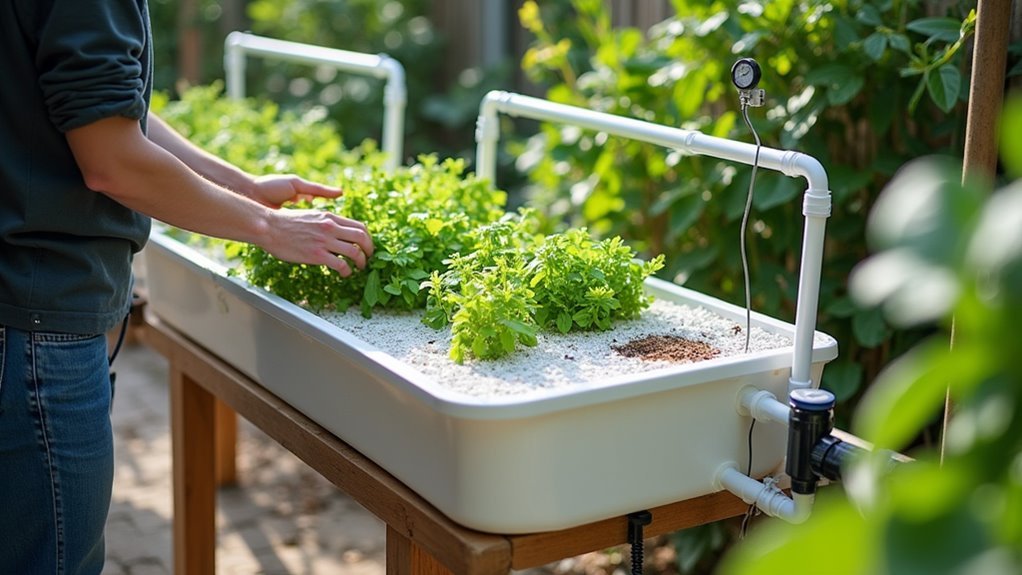
If you’re planning a family-sized aquaponics setup, think of the fish tank as the heart of the system—get that wrong and nothing else will quite hum. I’d start with at least a 100-gallon tank to support 10–15 edible fish; I know some folks push bigger, and honestly I think that’s safer. Properly sized tanks help maintain water quality and reduce parameter fluctuations. Match grow bed dimensions to the tank — 1.5–2× the tank’s surface area, minimum ten square feet so nutrient cycling works. Pumps should move 1–2× the tank volume per hour, and filtration or a sump adds resilience.
Expect each grow bed to handle roughly 4–6 plants per square foot. Use weather-resistant materials and keep layouts accessible; it’s easier to enjoy, repair, and, well, maintain — sorry, I mean do maintenance. It’s rewarding too.
Choosing Fish and Plants for Reliable Year-Round Harvests
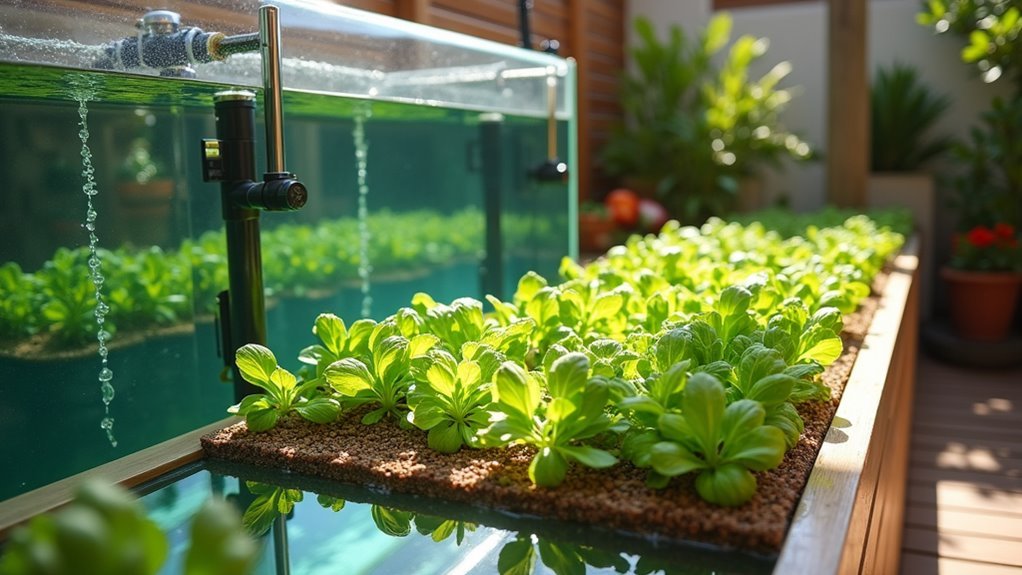
I like to think of fish and plants as partners in the system—get that relationship wrong and even a perfectly sized tank and grow bed won’t save you.
I focus on Fish selection first; tilapia’s hardy and fast-growing, good for year-round food, while goldfish or koi suit ornamentals ponds.
Plant compatibility matters: leafy greens and herbs demand fewer nutrients and give frequent harvests; fruiting crops need richer, stable systems.
I think balance is key, like pairing wine with food. Maybe you start simple. Well, my tips:
- Match fish species to your climate and harvest goals.
- Prioritize leafy greens and herbs for steady yields.
- Add tomatoes/cucumbers only after stability is proven.
- Consider ornamental fish if not eating them.
Regularly monitoring ammonia and nitrate levels helps sustain bacterial activity and system balance nitrification.
System Types Compared: Media Beds, Rafts, NFT, and Hybrids
Although each aquaponic setup shares the same basic goal—turning fish waste into plant food—they behave very differently in practice, like cousins who grew up in different towns and barely recognize each other’s habits.
I prefer media beds for beginners; they’re forgiving, well, use gravel or clay for both support and biofiltration, and handle a wide range of plants.
Rafts rock for fast leafy greens—simple, productive.
NFT suits rapid, small crops but needs attention.
Hybrids blend strengths, giving flexibility and resilience if you want mixed yields.
You’ll balance aquaponics nutrition needs with your fish selection and space.
I think media beds are easiest to start, though NFTs and hybrids boost density later.
Maybe that’s obvious, but it’s worked for me—seriously.
LECA using media beds with LECA can simplify maintenance due to stable pH and excellent root aeration.
Step-by-Step Setup and Cycling Your Ecosystem
Because every aquaponic system needs a solid foundation, I start by setting up the fish tank and grow bed first and making sure everything’s spotless and food‑grade — don’t skip that step.
A critical step is ensuring stable nutrient balance and efficient water recirculation to support plant and fish health.
Then I cycle the system: add a controlled ammonia source (fish food or starter) and watch ammonia and nitrites daily until they drop to zero; that means aquaponics bacteria are established.
I keep temperature and pH stable.
I introduce fish slowly, feeding lightly and testing often.
In my experience it’s like babysitting — patient, predictable.
- Clean food‑grade components
- Add ammonia source and monitor
- Use bacterial inoculants to speed cycling
- Gradual fish introduction and fish feeding
Maybe I’m overly cautious, but it works.
Oops, did I say overly? I mean cautious, really.
Maintenance, Water Quality Monitoring, and Troubleshooting
When you’re running an aquaponics setup, maintenance isn’t a one‑and‑done chore; it’s the steady drumbeat that keeps fish and plants happy.
I test pH (aiming 6.8–7.2), ammonia (near zero), nitrites and nitrates several times a week with a reliable kit or digital meter, and I’ll do a 10–20% partial water change if levels spike.
I watch fish daily for stress or disease and quarantine newcomers — it’s saved me grief.
I keep oxygen above 6 mg/L with extra aeration because bacteria need movement.
When algae or aquaponics pests appear I shade tanks and control light, and I dose targeted organic supplements for deficiencies.
I use some system automation, but I still check things myself.
Maybe I’m picky, but it prevents big, expensive failures later, indeed.
Regular biofilter maintenance ensures the nitrogen cycle stays healthy, and ammonia is converted to nitrate biofilter maintenance.
Integrating Aquaponics Into Your Landscape and Aesthetics
While you can treat an aquaponics table as purely functional, I think it’s way more fun — and frankly more satisfying — to make it part of the garden’s look so it feels like it’s always belonged there.
I often tuck plant troughs into raised beds, or disguise fish tanks as pond-like seating; it’s cozy, practical, and people notice.
Use artistic plant arrangements to soften edges and try decorative water features for sound and movement.
I like natural wood, stone and mulch to tie it together.
Maybe add pathways, seating or a green screen for privacy.
Examples I recommend:
- Pond-like fish tank integrated into a garden bench
- Raised beds with artistic plant arrangements
- Decorative water features with bubbling outlets
- Natural stone surrounds for cohesion.
Regular water quality testing and maintaining proper pH are essential practices to ensure a stable backdrop for your design water quality.
Frequently Asked Questions
How to Build an Aquaponics System Step by Step?
Build it by planning layout and sizing: Design considerations include tank location and sunlight, then assemble system components — tank, grow beds, pumps, plumbing, media; I’ll cycle water, monitor parameters, and adjust as you learn.
What Are 5 Disadvantages of Aquaponics?
Sure, aquaponics isn’t just paradise: I’ll tell you five drawbacks—high startup costs, ongoing maintenance time, delicate species needs, failure risk, and limited scalability—challenging economic sustainability and sometimes uncertain environmental impact for you to weigh carefully.
Why Is Aquaponics Not Profitable?
It’s often unprofitable because high startup and operating costs, limited scale and yields, regulatory burdens, and Market challenges reduce Economic viability; I’d caution you that time, expertise, and local demand usually outweigh returns in practice.
Why Do Aquaponics Fail?
Like a leaking roof, aquaponics fail when I don’t follow System maintenance, let water chemistry run wild, overstock or overfeed, skip monitoring, miss pest management, or build plumbing and aeration causing toxic conditions for life.