A lone solar panel is like a lighthouse for a tiny ecosystem, guiding power to fish and plants. I think off-grid aquaponics is doable, but it’s not magic — it’s careful math and choices. I’ll walk you through sizing panels, batteries, low-watt pumps and winter trade-offs; maybe you’ll spot pitfalls I missed, or maybe I misspoke — no, let me rephrase — you’ll get practical, usable steps.
Assessing Your Aquaponics Energy Needs
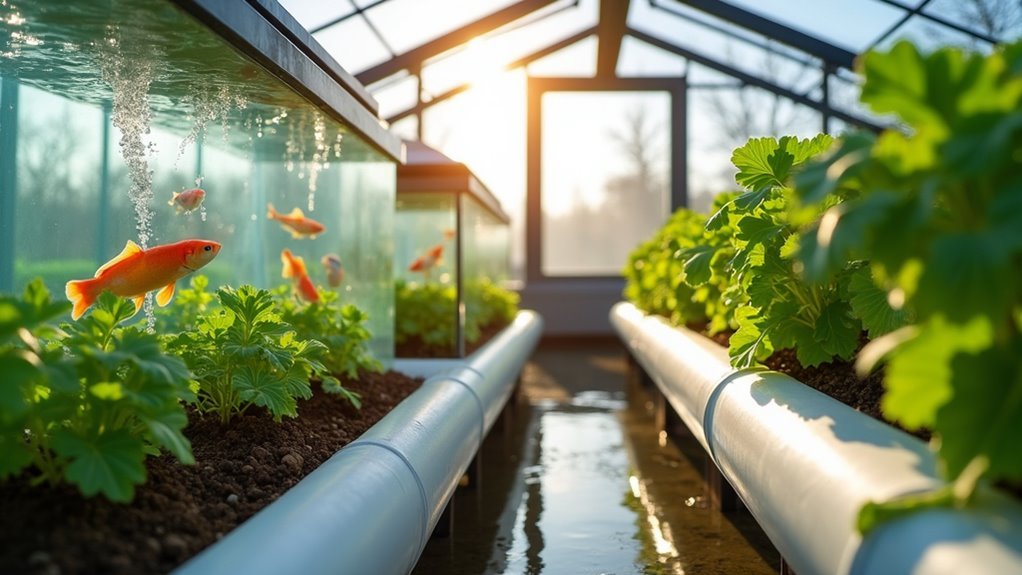
How much power does your little ecosystem actually need? I start by listing every electrical piece, pumps, sensors, lights, and adding their wattage, because you can’t guess. Then I estimate daily use by multiplying watts by runtime; it’s simple math, yet revealing.
In winter you’ll probably need more heat or light, so account for seasonal spikes. Don’t forget backup power needs: batteries that keep circulation during cloudy days or outages matter. I think focusing on energy efficiency and system optimization early saves headaches later.
It’s like tuning an engine; small tweaks make big differences. Maybe I’m biased, but doing this homework made my aquaponics far more reliable and, well, less stressful. I learned to track consumption weekly, which really helps too, and often. Regular maintenance and optimizing pump flow can further reduce energy use, especially when aligned with water quality management.
Sizing Solar Panels for Reliable Pump Operation

I usually start by calculating the pump’s total wattage and adding a 20–30% safety margin because you don’t want your array undersized.
For example, a 10 W pump running 24 hours needs about 240 Wh/day.
Then I check peak sun hours from a solar resource map and size the solar array so it can meet that demand on the shortest winter days.
And I tell you, it’s like packing extra snacks for a long hike.
I’m not entirely sure, but in my experience, you’ll also want a battery bank to store excess energy for cloudy stretches — sorry, make that: you’ll want one to keep the pump running when sunlight’s low.
Also, regular water quality management including monitoring ammonia, nitrite, nitrate, pH, and temperature, ensures a stable system.
Pump Power Requirements
Why should you care about pump wattage when sizing solar for an aquaponics setup? I do, because pump efficiency determines how much sunlight and battery reserve you actually need. DC pumps typically draw 2W to 20W, so guessing will fail. I think it’s wise to provision 2–3× the pump’s rated wattage to ensure reliable operation. For example, a 10–20W pump usually needs about 50–100W of panel capacity and a 12V 50–100Ah battery bank for cloudy days. Power optimization also means selecting low flow or efficient models and matching head to pump. Maybe it sounds cautious, but it keeps fish alive. Quick reference:
| Pump (W) | Panel/Battery |
|---|---|
| 2–5 | 10–25W / 50Ah |
| 6–10 | 30–50W / 50Ah |
| 11–20 | 50–100W / 100Ah |
Solar Array Sizing
Where do you start when sizing solar for a pump that’s got to run reliably day and night? First, I calculate daily watt‑hours: a 10 W pump running 24 hours uses 240 Wh. I mean then I multiply by a safety factor — I usually use 1.25 — so 300 Wh.
You should aim for 20–25% extra to cover cloudy days and seasonal dips; think of it like a buffer tank for energy.
A 250 W panel can produce roughly 1,000 Wh/day in ideal sun, so one panel could cover that pump, but solar panel efficiency and winter insolation drops (sometimes 50%) mean I’ll plan for more.
I consider grid connection options as backup, or add panels/batteries.
I think that’s sensible, conservative, but reliable.
Designing Battery Banks and Charge Control
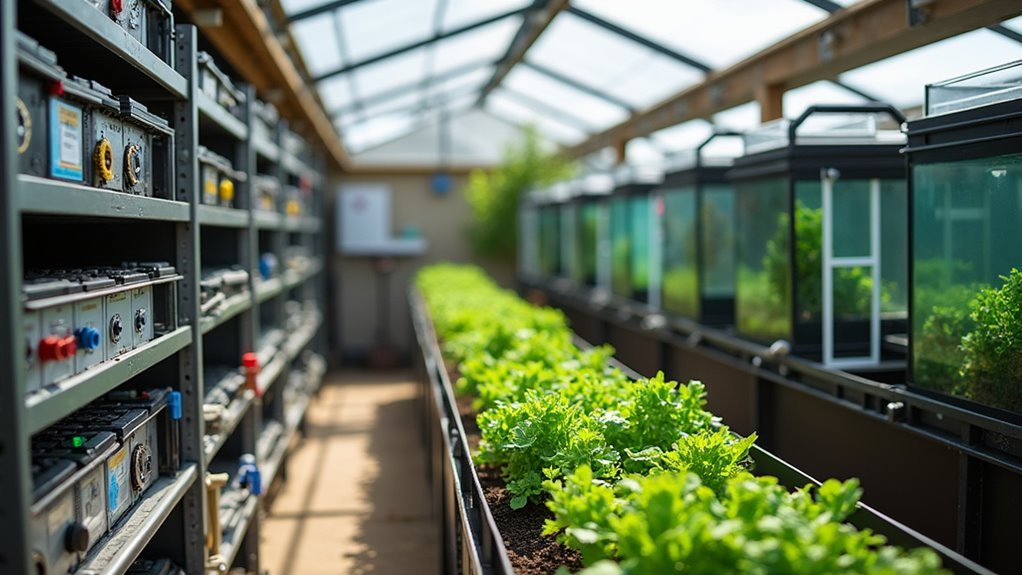
A good battery bank is the backbone of any off-grid aquaponics setup, and I’m going to walk you through why getting its size and control right matters. I start by calculating total system load so battery capacity covers cloudy days and night — you don’t want pumps or aeration quitting.
I prefer deep-cycle batteries; lithium works great, lead-acid is cheaper but heavier. Charge controllers must match array amperage and bank voltage, that’s non-negotiable. A BMS helps monitor voltage, current, temperature and it really protects your investment.
Regular monitoring of ammonia and nitrate levels helps ensure nitrification stays on track.
In winter I usually, sorry — usually upsized capacity and chose better controllers to offset low sun. It’s not rocket science, but it takes care. I’m not entirely sure, maybe though.
Choosing Low-Wattage DC Pumps and Efficient Components
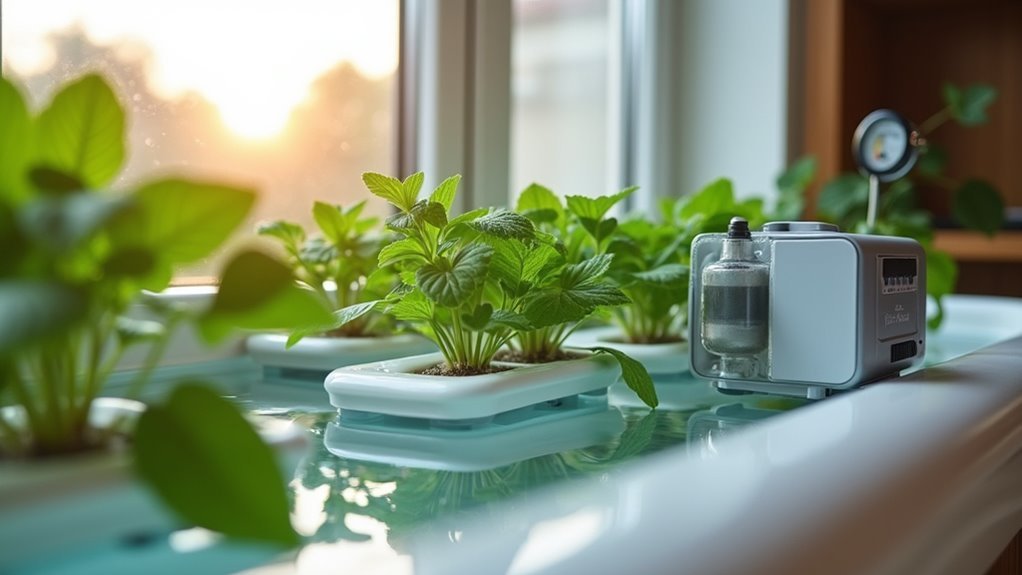
Because energy’s the scarce currency in any off-grid setup, I lean hard toward low-wattage DC pumps — think 2 to 10 watts — since they’ll keep your bills and battery drain down while still moving water reliably.
Energy’s the scarce currency off-grid—I prefer low-wattage (2–10W) DC pumps to save batteries and still move water.
I favor variable-speed, high-efficiency models; they let you match flow to need and cut draw during idle times. In my experience, the right flow (around 360 GPH for small systems) beats brute power.
Consider:
- Choose variable-speed pumps to tune flow and reduce power use.
- Use timers or sensors so pumps run only when needed, saving energy.
- Prioritize durable designs to minimize pump maintenance and unwanted pump noise.
I think it’s like choosing a quiet—no, quiet—car; you want efficient, flashy. Maybe that’s obvious, but it helps. Also, prioritize using food-grade PVC to reduce chemical leaching risks in your system.
Backup Power Strategies and Redundancy Options
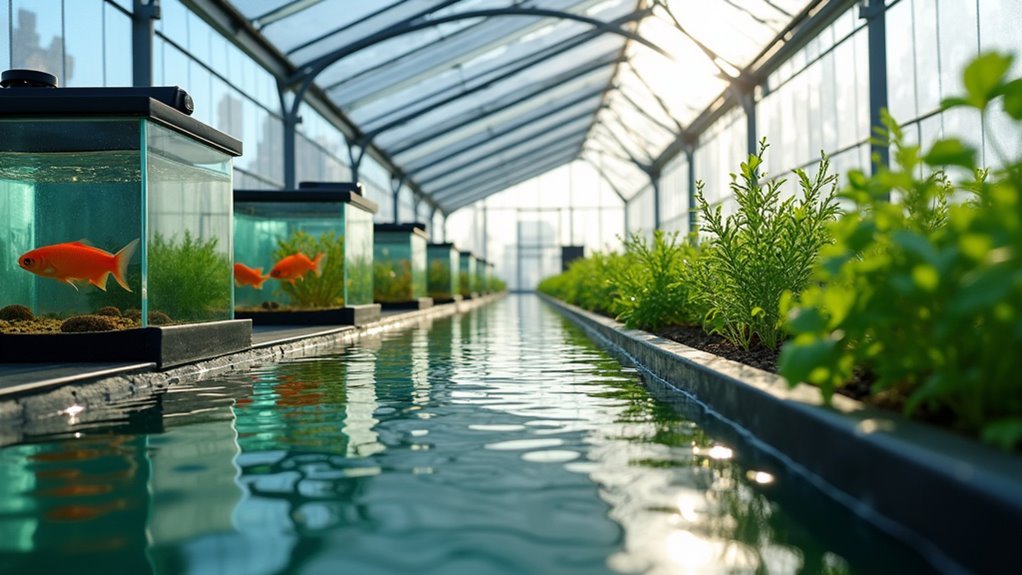
If you plan for cloudy weeks or random outages, you’ll want a backup plan that actually kicks in without you babysitting the system. I rely on backup batteries and portable power banks as my first line for emergency power, and I pair them with 5–10W DC pumps to stretch runtime. Regularly test backup air pumps to ensure they start reliably during an outage.
A manual or automatic transfer switch makes switching seamless — no fumbling. I think keeping 24–48 hours of charged reserve is realistic; it’s saved me more than once.
Redundancy planning means tests, spare batteries, and maybe a small portable generator for true failures. Test regularly, replace weak batteries, and don’t forget cords and fuel.
It feels a bit like carrying a spare tire, but, you know, for your fish. I’m not exaggerating, really, honest.
Managing Energy Use During Short Winter Days
When winter squeezes sunlight down to a few short hours, you’ve got to get strategic or your fish and plants will remind you — loudly.
When winter squeezes sunlight to a few short hours, get strategic—your fish and plants will remind you, loudly.
I plan for larger batteries and efficient panels; it’s like stacking firewood before cold hits.
I think storm coverage matters — don’t skip it.
- Bigger batteries
- Low-wattage DC pumps
- Backup generator
Adjust panel orientation for low sun; tilt steeper, rotate less.
Schedule pumps at peak sun and favor under-10W pumps to stretch reserves.
I keep an extra battery bank; maybe overkill, but it calms me.
My routine: monitor consumption, shift nonessential runs to midday, and test the system.
I’m not entirely sure, but these steps usually work.
Oops, that sounded boastful—well, sorta.
Not perfect, though, really.
In a properly balanced system, maintaining stable pH and oxygen levels supports shrimp and plants nitrogen cycle and reduces outages.
Installation, Monitoring, and Maintenance Best Practices
I check pumps and plumbing regularly—clogs, airlocks, or loose fittings will ruin a day fast. I also keep an eye on water quality, testing pH, ammonia and temperature with a simple kit because fish and plants won’t forgive sloppy numbers. Honestly, it’s like monitoring a tiny ecosystem that needs babysitting.
Maybe I’m being paranoid, but I schedule routine pump tests and backup checks every other week—no, make that weekly sometimes, and it saves me headaches later. I also perform weekly checks on water quality parameters, especially pH, ammonia and nitrates, to catch imbalances early water quality monitoring.
Pump and Plumbing Checks
Although pumps are often out of sight, they shouldn’t be out of mind — and I’ll tell you why. Pump maintenance and plumbing inspection are the backbone of any off-grid aquaponic setup; I check connections like a habit, ’cause leaks ruin flows fast.
I watch flow rates and use a pressure gauge; if numbers drop I clean or replace parts.
- Secure fittings: tighten joints, look for cracks, and prevent leaks before they start.
- Clear lines: inspect sumps and supply tubes for blockages, especially after winter—ice does weird things.
- Monitor performance: track flow meters, clean filters and check valves; it’s tedious but extends gear life.
I think routine checks save headaches, honestly. Maybe I’m obsessive, but it works. Do them weekly, really.
Water Quality Monitoring
After you tighten fittings and clear lines, water quality is where you’ll see the real effects — good plumbing keeps things running, but the chemistry’s what actually keeps fish and plants healthy. I install water testing kits and check pH, ammonia, nitrite, and nitrate weekly; seasonal changes need extra attention. I keep filters clean and aeration steady so toxins don’t build up. pH balancing around 6.8–7.2 is my target for most species. Clean delivery lines too; clogs or leaks will ruin tests. I think it’s like tuning an engine — small tweaks matter. Maybe I’m picky, but regular checks save stress. I’m not entirely sure, but this routine’s saved my stock than once.
| Item | Frequency |
|---|---|
| Water testing | Weekly |
| Filter check | Weekly |
| Line inspection | Monthly |
Frequently Asked Questions
What Is the Most Efficient Aquaponic System?
The most efficient aquaponic system is vertical raft/NFT hybrid I’ll build to maximize Aquaponics sustainability and Water system optimization; I prioritize compact layouts, energy efficient designs, low-wattage pumps, automation, and fast-growing species so you thrive.
Why Is Solar Energy a Better Energy Option for an Aquaponics System?
Bright, bountiful benefits: I prefer solar because it’s reliable, cuts costs, protects fish health, and supports sustainability while offering strong solar panel durability and sufficient battery storage capacity so you and your system stay resilient.
Can a Solar Panel Be Used to Pump Water?
Yes, I’ve used solar panels to run pumps, and it works reliably if you manage Solar panel maintenance and design for Water flow optimization; I’ll help you size and maintain systems for steady circulation daily.
How Much Electricity Does Aquaponics Use?
About 20–100 watt‑hours daily for small systems; I picture a tiny pond’s hum under moonlight, and I’ll tell you energy consumption varies with pumps and lights, so I focus on efficiency optimization to cut demand.