I’ve learned that ammonia’s the silent troublemaker in aquaponics — it builds up fast and can wipe out fish if you ignore it. I’m not entirely sure, but I think of the nitrogen cycle like a car’s check-engine light: ignore it at your peril. In my experience regular testing and quick fixes work best. There’s more to say about thresholds and emergency moves, so stick around —
What Is Ammonia and Why It Matters in Aquaponics
Ever wonder what that invisible stuff in your tank actually is? I’ll tell you: it’s ammonia, a waste from fish excretion that shows up as un‑ionized ammonia (NH₃) and ammonium (NH₄⁺). Its mix depends on pH and temperature, so higher pH and warmer water raise NH₃ and increase ammonia toxicity.
It’s colorless and odorless, so you’ve got to test water regularly. I’ve seen subtle changes in fish behavior — sluggish swims, gasping — before physical damage appears. Excess ammonia damages gills and tissues, causing stress, disease or death if ignored.
Aim to keep levels between 0–0.25 ppm; anything above 0.5 ppm is risky. I think it’s simple to monitor, well, if you actually test. Do it early — your fish will thank you, probably really. Regular testing is a cornerstone of fish care and helps prevent deadly spikes by maintaining water quality.
The Nitrogen Cycle and the Role of Nitrifying Bacteria
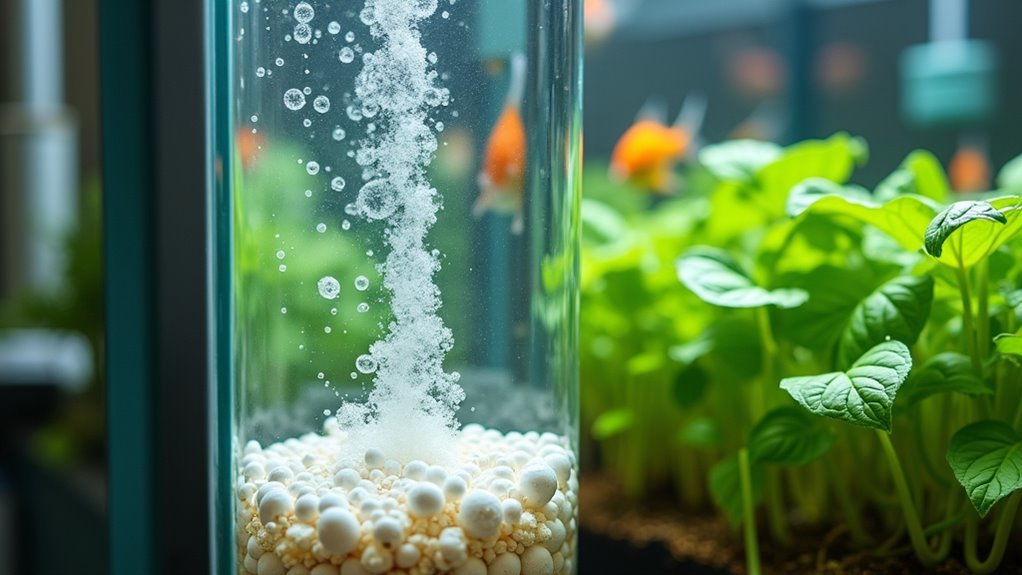
So once you’ve got ammonia on your radar, the next thing I look at is how the nitrogen cycle handles it — that invisible cleanup crew made up mostly of nitrifying bacteria.
| Stage | Notes |
|---|---|
| Ammonia to Nitrite | Nitrosomonas |
| Nitrite to Nitrate | Nitrobacter |
| Establishment | 6–8 weeks |
I watch Nitrosomonas and Nitrobacter do the Nitrogen transformation: ammonia → nitrite → nitrate. Bacterial colonization takes time; in my experience it’s about 6–8 weeks to become effective. They need oxygen, stable pH (6.5–8.5) and plenty of surface area like expanded clay. Too much ammonia or nitrite inhibits them, which is frustrating, and they produce acid that can lower pH unless buffered. I think of them like slow-working janitors. Maybe I’m cautious, but I check parameters often — helps avoid surprises. Regular monitoring and biofilters upkeep prevent surges that stress Nitrosomonas and Nitrobacter.
How Ammonia Affects Fish and Plants
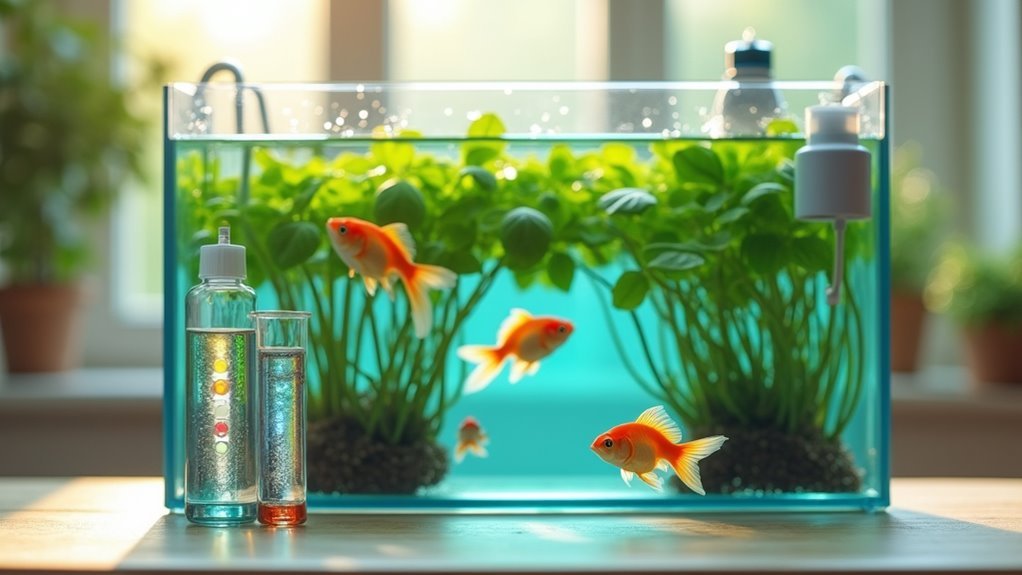
Although ammonia might seem like just another chemical reading on your chart, I’ve learned it’s one of the quickest ways to wreck Fish health and slow down your plants.
I’ve seen ammonia burn gills, irritate tissue, and stress fish until their immune systems collapse; it’s brutal and fast, honestly.
Plants don’t love it either — high ammonia throws the nitrogen cycle out of balance, creates plant toxicity risks, and even encourages algae to bloom, which chokes roots.
In my experience, impacts stack: impaired respiration in fish, organ damage, reduced nutrient uptake by crops, and instability across the whole system.
Regular water quality testing with a reliable water test kit helps you spot rising ammonia before it reaches dangerous levels water test kit and take preemptive action.
Maybe you can catch spikes early, or maybe you won’t — but acting fast matters, I think, really.
I’m not entirely sure, but don’t wait to respond.
Safe Ammonia Ranges for Common Aquaponic Species
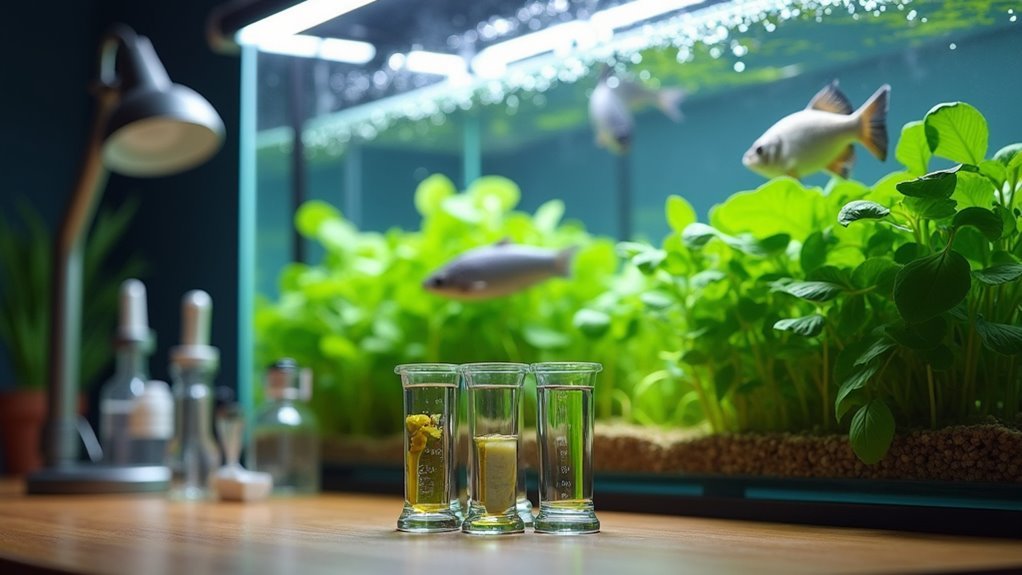
When I’m running an aquaponic setup, I try to keep ammonia low because even small rises can snowball fast.
In my experience, most freshwater staples like tilapia and carp do okay up to about 0.25 ppm, but anything over roughly 0.5 ppm starts to get risky.
I aim for below 0.25 ppm routinely — that’s where long-term stability and fish health management meet.
Sensitive species, like neon tetras, need under 0.1 ppm or they’ll stress quickly.
Saltwater species such as clownfish tolerate about 0.5 ppm, but I wouldn’t push it.
Spikes above 1.0 ppm are emergencies; act fast.
Good aquarium filtration helps prevent rises, and honestly, paying attention early saves you grief later.
Understanding the nitrogen cycle helps you predict how quickly ammonia converts to nitrite and nitrate.
Testing Methods and Recommended Monitoring Frequency
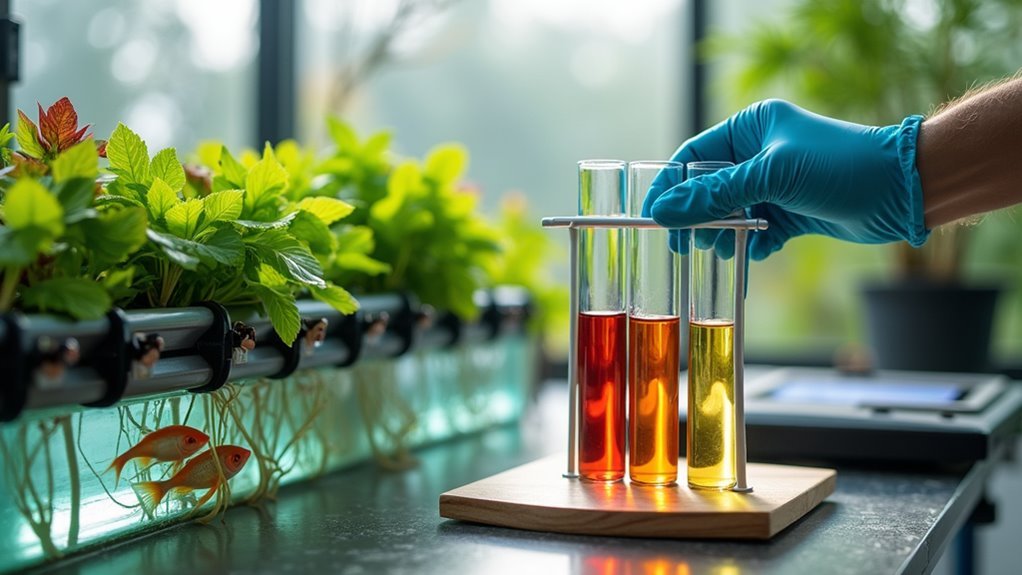
After talking about safe ammonia ranges, I find the next step is knowing how and when to test so you can catch problems early. I use validated test kits like the API Freshwater Master Test Kit or Seachem Ammonia Alert because they’re reliable. I prefer certain Testing techniques, and I set Monitoring intervals accordingly.
Test at least weekly during cycling, and if you suspect a spike, test every 2-3 days. Take samples from the highest and most active feeding areas so readings are representative. Always measure pH and temperature concurrently, as they influence toxicity levels and the accuracy of ammonia tests.
Record and track results over time; trends tell you more than single readings. I’m not entirely sure, but simple logs are really helpful. Regular monitoring of ammonia, nitrite, and nitrate alongside pH and temperature keeps the nitrification process transparent and responsive nitrification process.
Immediate Emergency Responses to Ammonia Spikes
If you spot a sudden ammonia spike, I stop feeding immediately—it’s the quickest way to cut new waste and calm the system.
Then I’ll crank up aeration and water flow, because more oxygen and movement helps the beneficial bacteria and keeps fish less stressed; think of it like opening windows in a smoky room.
For future upgrades or repairs, consider using food-grade PVC with schedule 40/80 fittings to reduce potential leaching and ensure safe water contact.
Finally, I do a 25–50% partial water change right away to dilute the ammonia—well, actually make that as much as needed within reason, maybe split it into two changes if you’re worried about shock.
Cease Feeding Immediately
Although it might feel drastic, I stop feeding the fish immediately the moment I spot an ammonia spike; it’s the quickest way to cut off the main source of new waste and buy you time to fix the system. I remove uneaten food and debris, perform a 25–50% dechlorinated water change, and pause feeding until readings return to 0–0.25 ppm. Dietary adjustments are temporary; I switch to smaller meals later and reintroduce food slowly. I rely on Biological filtration recovery, giving bacteria time to oxidize ammonia, though you know, it takes a bit. Here’s a quick checklist table to grab attention:
| Action | Purpose | When |
|---|---|---|
| Stop feeding | Stop new waste | Immediately |
| Remove debris | Reduce ammonia sources | As found |
| Water change | Dilute ammonia | 25–50% now |
I monitor levels continuously and maybe, I’m not entirely sure, but this calm, deliberate approach usually stabilizes the system. it’s worked for me.
Boost Aeration and Flow
When ammonia spikes, I jump straight to boosting aeration and flow because it’s the fastest way to give both the fish and the bacteria a fighting chance. I usually add air stones or pump-driven diffusers — simple Aeration techniques that dissolve oxygen quickly.
I’ll also boost Water flow with extra circulation or filtration; moving water is like opening windows in a stuffy room. Rapidly raising dissolved oxygen toward 5 mg/L really helps, in my experience, because nitrifiers breathe easier and un‑ionized ammonia drops.
I sometimes throw in a paddlewheel or venturi injector if I’ve got one, they work well. Maybe I’m not entirely sure why I like them so much, but they calm me down — and the fish and help the biofilter recover faster.
Perform Partial Water Changes
After I’ve boosted aeration and flow, the next thing I reach for is a quick partial water change — it’s the fastest way to dilute a spike and calm stressed fish.
I usually remove 25–50% and replace with dechlorinated fresh water right away; do it the same day you detect ammonia. It cuts toxicity fast, and in my experience you can almost sniff relief — less water odor and calmer fish.
Test ammonia after the change; aim for 0–0.25 ppm. Keep testing daily and make gradual adjustments until the system stabilizes.
Watch pH fluctuation, though — adding new water can shift it, so match temperature and pH as close as possible.
Maybe that sounds fussier than needed, but it helps—no, it really does, seriously.
Long-Term Practices to Prevent and Manage Ammonia Issues
Because a steady, low ammonia level is the backbone of a healthy aquaponics system, long-term practices matter more than quick fixes.
I test weekly; Aquaponics maintenance and Water quality monitoring are nonnegotiable habits I keep.
I think a robust biofilter with lots of surface area is like the liver of the system — it quietly cleans.
To support this, biofilter surface area should be a primary design consideration when sizing your system.
Don’t overfeed.
Don’t overstock.
Those simple rules cut waste dramatically.
I also add live plants and occasional biofilter upgrades to absorb leftover ammonia, and perform partial water changes during spikes to help bacteria recover.
Maybe it’s obvious, but routine checks prevent panic.
In my experience these steady steps beat emergency chaos.
I’m not entirely sure, but consistency wins most of the time.
Trust me, you’ll thank yourself later.
Frequently Asked Questions
What Should the Ammonia Level Be in Aquaponics?
It should be kept between 0 and 0.25 ppm for safety; I monitor, use ammonia detoxification methods during spikes, and prioritize fish health management so you don’t stress and can act quickly to correct levels
What Happens if Ammonia Levels Are Too High in a Fish Tank?
If ammonia levels get too high, your fish suffer quickly; ammonia toxicity causes gill damage, stress and respiratory failure, and I’ll see fish health deterioration, reduced bacteria function, poor plants, so act fast right now.
What Do You Do if Your Fish Tank Has Ammonia Spikes?
Like a siren, I’m acting: I perform 25–50% water changes, stop feeding, remove waste, boost aeration, use conditioners and add bacteria—because biofiltration importance reduces ammonia toxicity and protects your fish while you monitor levels continuously.
Why Is Too Much Ammonia a Problem in an Aquaponic System?
I’m warning you: too much ammonia causes Ammonia toxicity, damaging gills, stressing fish, and crippling Biological filtration; I recommend prompt water changes, reduced feeding, and aeration so your system recovers and fish stay alive now.