Algae can be like a slow green tide swallowing your tank. I work with aquaponics and I’ve found simple fixes that actually help. I think balancing light and nutrients is key—it’s not just shading; well, actually, it is a big part. Maybe you’ll prefer biological controls, or nutrient tweaks; I’ll explain practical steps that usually work, so you can get clearer water.
Understanding Algae and How Blooms Form
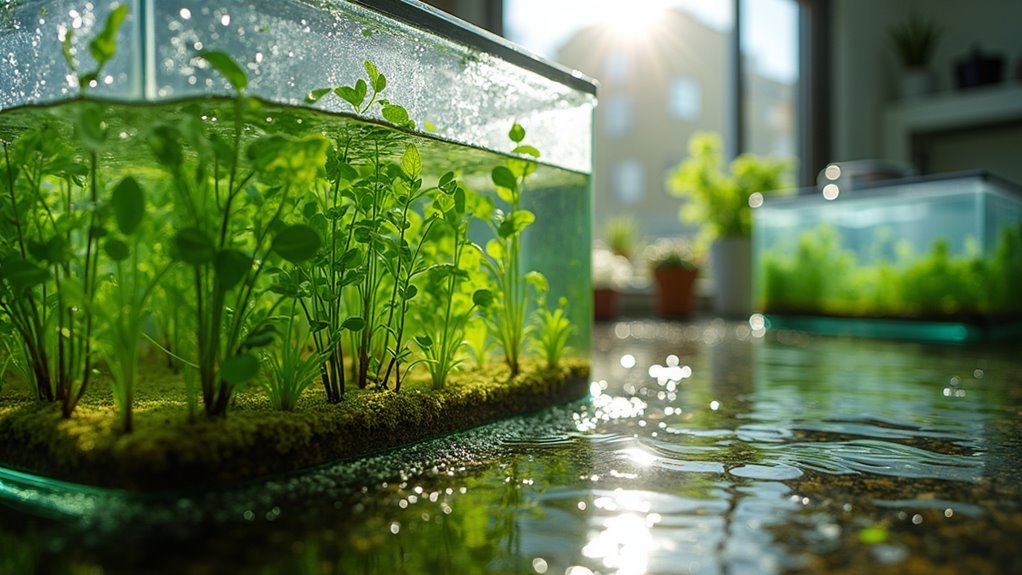
If sunlight, nutrients, warm water and a bit of stagnation line up, algae can suddenly take over — and I mean suddenly. I’ve watched tanks go from clear to green in days when nitrogen and phosphorus spike; it’s like someone flipped a switch.
The algae lifecycle is driven by light, warmth (around 68–86°F), and slow water that keeps cells lounging near the surface. I think competitive microorganisms sometimes help keep blooms in check, but imbalances—overfeeding, decaying matter—tip the scale.
In my experience, understanding those triggers is half the battle. It’s kind of like a weed garden: let conditions favor growth and you’ll get blooms. Maybe you’ll prevent it, maybe not; still, control starts with knowing why.
I’m learning, and you can too right now. Regular pH management supports stable growth and helps prevent blooms.
Identifying Signs and Types of Problematic Algae
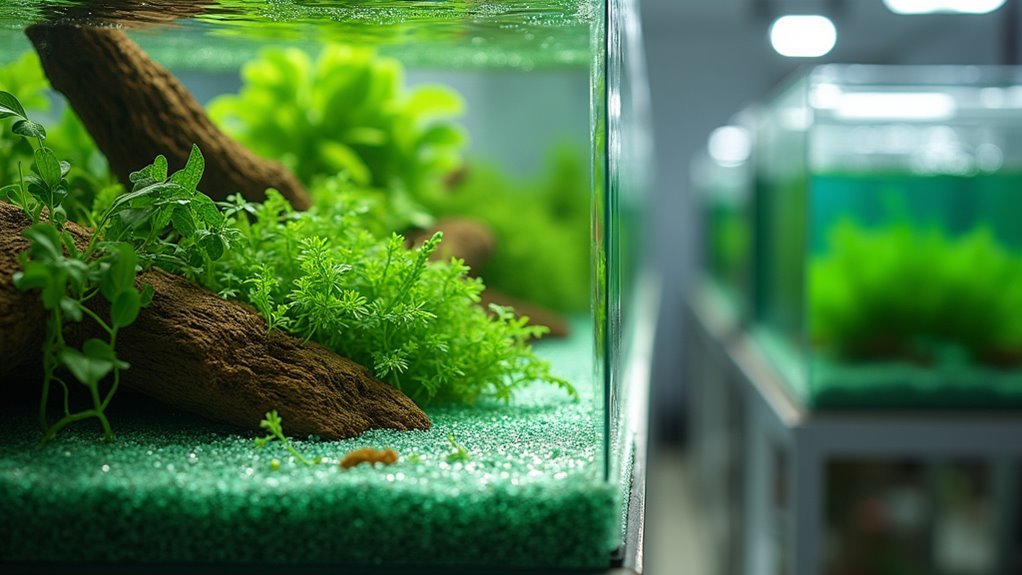
When I first saw a tank go from clear to a greasy green film in a couple of days, I thought it was dramatic—and it is—so you’ll want to learn the signs fast. I do a lot of algae identification by eye; visual cues matter.
Thick green scum or slimy surfaces scream trouble. Filamentous strands form stringy mats on equipment, while blue-green cyanobacteria often look like pea-soup or paint—stinky too. You’ll notice murky water, sudden pH swings, or low oxygen stressing fish and plants.
Thick green scum, slimy gear, stringy mats — and smelly blue‑green bloom; murky water, pH swings, stressed fish
Sometimes plecos or otocinclus are working for you, which I appreciate. I think catching surface scum or color changes early is key.
Maybe I’m biased, but spotting problems fast prevents bigger headaches—seriously. I seen—no, I’ve seen this happen several times now. Regular water testing for quality control helps detect imbalances early and prevent disease transmission water testing.
Physical Light-Blocking and Shading Strategies
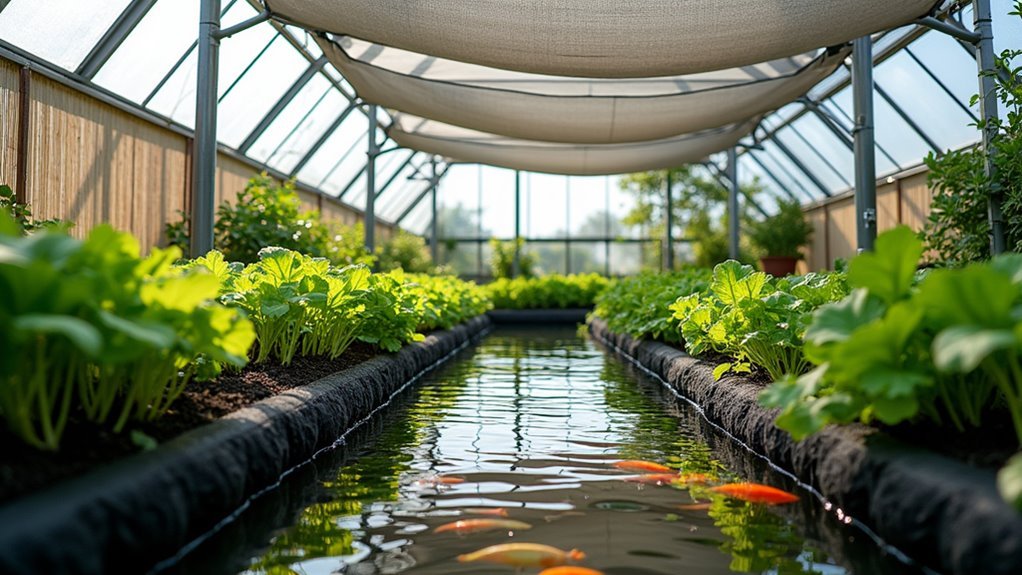
After spotting that greasy green film in a tank, I usually start by cutting the light it gets—light is, honestly, the single biggest lever you can pull.
I hang a shade cloth over tanks and float nets; those can block up to 80% of sunlight, so they make a big difference. I also plant overhangs—natural shade from shrubs or trees can cut light by fifty percent or more, which helps, well—no, it really helps.
For hard cases, black pond liners or reflective covers absorb or deflect rays and stop direct surface exposure.
Positioning tanks under a pergola or in a shaded corner reduces peak sun.
Pond dyes or dark covers will darken water, too.
I think it’s a straightforward, first step for most setups.
Maintaining consistent water quality supports steady algae control during the cycling phase water quality.
Biological Controls and Algae-Eating Species
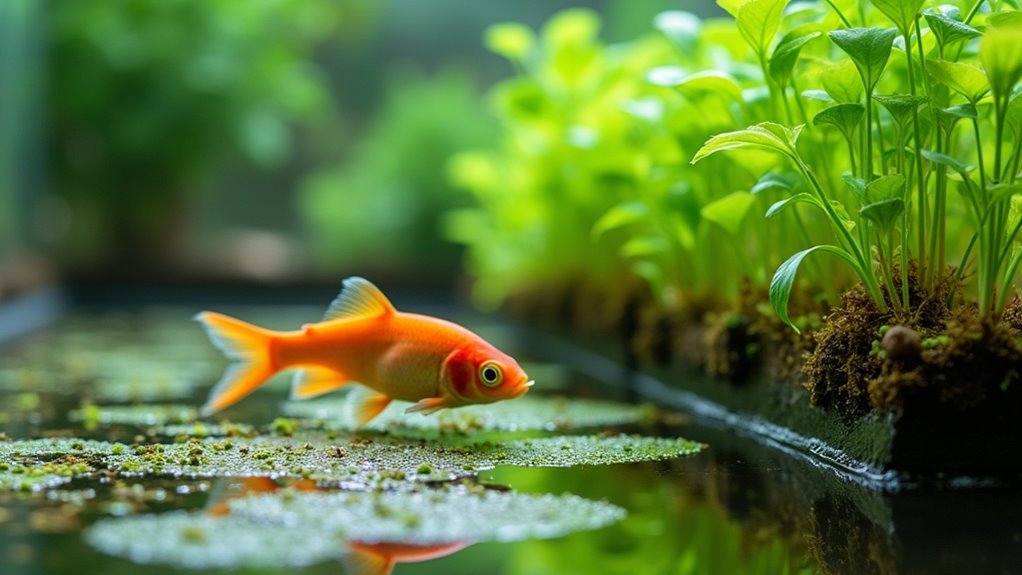
Although it’s tempting to reach for chemicals, I usually start with living cleaners—algae-eating fish and invertebrates—because they work quietly and keep the system balanced.
I add Siamese algae eaters, plecos, and mollies as primary grazers; nerite snails and Amano shrimp tag along like tiny janitors. In my experience these aquarium companions cut algae without upsetting plants, though fish compatibility matters—don’t cram aggressive species with peaceful grazers.
I watch stocking rates and behaviour closely; overstocking’s a real risk, you know, and it can stress the whole system. It’s sustainable and reduces chemicals, which I like.
Maybe it won’t solve every bloom, I’m not entirely sure, but balanced populations usually keep tanks cleaner, steady, and more natural-feeling.
Regular testing of water parameters helps ensure that nutrient inputs remain balanced and supports sustained algae control water parameters.
Nutrient Management and Water Quality Practices
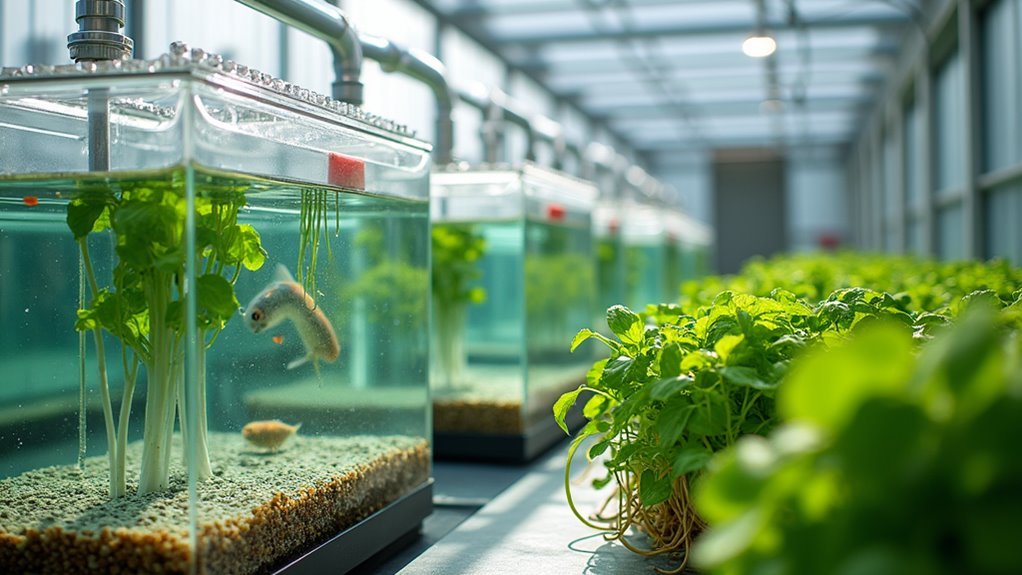
Keeping algae munchers around helps, but you can’t rely on them alone; nutrient control and water quality are where the real long-term wins happen. I check tanks weekly — Water testing for nitrate, phosphate, pH and ammonia tells me where nutrients pile up. I think simple habits matter.
Algae munchers help, but weekly water tests and nutrient control are the real long-term wins.
For example:
- Balance fish-to-plant ratios and harvest mature greens to avoid nutrient overload.
- Don’t overfeed; uneaten food decays and feeds algae fast.
- Add nutrient-absorbing plants, use biological filtration and aeration to help uptake.
Well, it’s like tuning an engine: small adjustments change performance. I’m not entirely sure, but regular monitoring prevents surprises. Sometimes I say “it’s obvious” — well, maybe not obvious; but it works.
I like to note trends, learn, adapt, and keep refining daily. Each observation feeds toward balanced nutrients management that supports all species in the system.
Frequently Asked Questions
How to Control Algae in Aquaponics?
I control algae by using Algae filtration, shading and algae-eating species, practicing strict Nutrient balancing through feeding and plants, scraping biofilms, and monitoring water; I’ll help you set up practical routines and simple checks daily.
How to Naturally Control Algae?
Like tending Eden, I focus on Algae prevention by adding algae-eating fish, floating plants and pond dye; I manage nutrients daily, improve Water circulation with pumps and don’t overfeed, so you’ll keep water clear naturally.
What Kills Algae Without Killing Fish?
I’d use an Algae predator, mechanical removal, shading and nutrient control, and safe Chemical alternatives like enzymatic or bacterial treatments; I don’t use harsh chemicals, so I protect fish while effectively killing algae each time.
Is Algae Bad for Aquaponics?
No — like a double-edged sword, algae isn’t wholly bad for aquaponics; I’ll explain: Algae pigmentation can benefit oxygen and food webs, yet Algae impact includes shading, nutrient competition, and potential toxins, so I’d manage.