I’ve spent way too many hours troubleshooting cloudy water and struggling plants before I finally understood the importance of getting my fish to plant ratio right. It’s kind of like finding the sweet spot on a thermostat—too much one way or the other, and everything suffers. A good calculator takes the guesswork out of balancing your system. Let me show you how it actually works.
Why the Fish to Plant Ratio Matters in Aquaponics
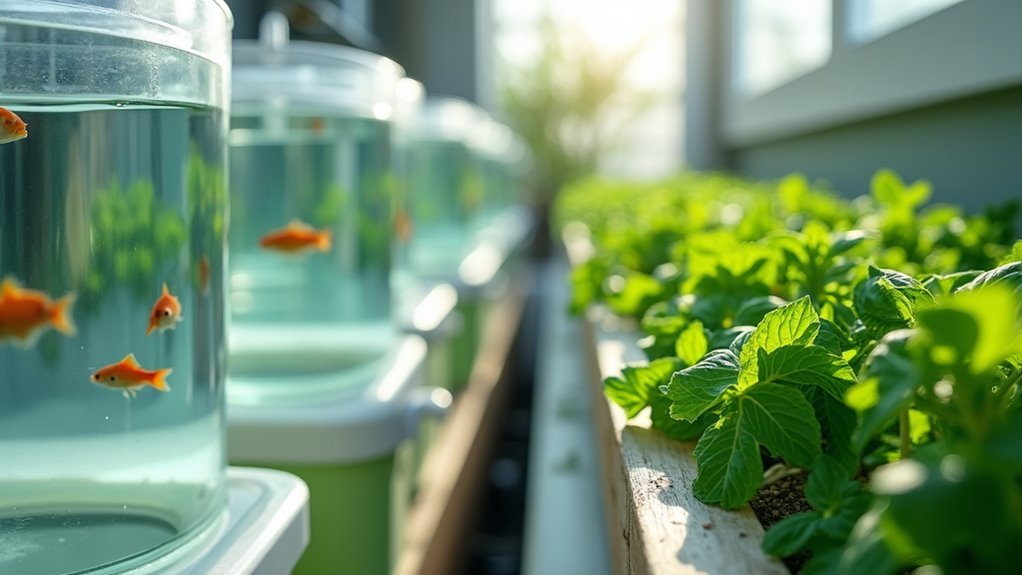
When you’re setting up an aquaponics system, getting the fish to plant ratio right is probably one of the most important decisions you’ll make. I think of it like a balancing act—too many fish and you’ll overwhelm your plants with waste, leading to ammonia spikes that can crash your whole system.
Too few fish? Your plants won’t get enough nutrients for proper growth.
In my experience, aquaponics survival depends heavily on this balance. Fish waste provides natural plant growth hormones and nutrients, but only when proportioned correctly.
A good starting point is roughly 1 pound of fish per 3-5 square feet of growing area.
You’ll probably need to adjust based on what you’re actually seeing in your system.
Key Factors That Influence Your Fish to Plant Ratio
When you’re figuring out the right fish to plant ratio, there are actually three main factors I’ve found really matter.
First, your fish species selection plays a huge role—tilapia produces way more waste than, say, trout, which means more nutrients available for your plants.
Then you’ve got to think about what your plants actually need nutritionally.
Plus, the type of system you’re running—whether that’s deep water culture, media beds, or NFT—since each one handles nutrient delivery differently.
Fish Species Selection
Why does your choice of fish matter so much for calculating the right ratio? Well, it’s actually pretty straightforward—different fish produce different amounts of waste.
Tilapia, for instance, generate considerably more waste than trout at similar sizes, which directly impacts aquaponics scalability.
Here’s what I’ve learned matters most:
- Waste production rates vary markedly between species, affecting nutrient availability
- Feed conversion ratios determine how much input creates usable plant nutrients
- Temperature requirements influence fish health management and system stability
In my experience, hardy species like koi provide more predictable waste output.
I’m not entirely sure there’s a perfect choice, but tilapia’s higher stocking density—typically 10-20 kg per 1000 liters—makes them popular for nutrient-hungry plants.
Plant Nutrient Requirements
How exactly do you figure out what your plants actually need from your fish? Well, it starts with understanding that different plants have vastly different appetites. Leafy greens typically require around 4,050 g/m² of nutrients, while fruiting vegetables—tomatoes, peppers, cucumbers—need closer to 5,080 g/m².
Plant growth stage matters too. Seedlings are like toddlers; they don’t eat much. Mature plants? They’re hungry teenagers demanding constant nutrient absorption.
Here’s something I’ve learned: water temperature and pH levels can actually mess with how well your plants take up nutrients. It’s not just about having enough fish waste—it’s about making sure your plants can actually use it.
In my experience, matching fish output to plant demands is probably the trickiest part of aquaponics. Get it wrong, and you’ll overload your system.
System Type Considerations
Although the fish to plant ratio might seem like a universal formula, it’s actually deeply tied to what type of system you’re running.
I’ve found that DWC setups need way more feed input—we’re talking 60-100g per square meter daily—compared to growbeds, which only require 15-40g.
Here’s what really matters:
- Filtration capacity affects how waste converts to usable nutrients
- Water flow patterns determine nutrient distribution to roots
- Media type influences beneficial bacteria colonization
Fish health directly impacts waste output. And honestly, a stressed fish produces inconsistent nutrients.
Environmental factors like temperature change everything too. Warmer water means faster metabolism, which means more waste—but it can also invite aquaponics pests if you’re not careful.
Each system type processes these variables differently, so adjust accordingly.
How to Calculate the Ideal Fish to Plant Ratio for Your System
When you’re setting up an aquaponics system, figuring out the right fish to plant ratio can feel a bit like solving a puzzle—but it’s actually more straightforward than you’d think.
I start by calculating my fish biomass and multiplying it by my target feeding rate. This helps me estimate waste production, which directly feeds my plants. One of the bigger aquaponics challenges I’ve faced is pest management when nutrients get unbalanced.
| Factor | Recommendation |
|---|---|
| Fish Biomass | 1 lb per 3-5 sq ft of plants |
| Daily Feed Rate | Based on fish size/species |
| Monitoring | Check water quality regularly |
| Adjustments | Tweak based on plant health |
Honestly, regular monitoring is probably your best friend here.
Using a Fish to Plant Ratio Calculator: Step-by-Step Guide
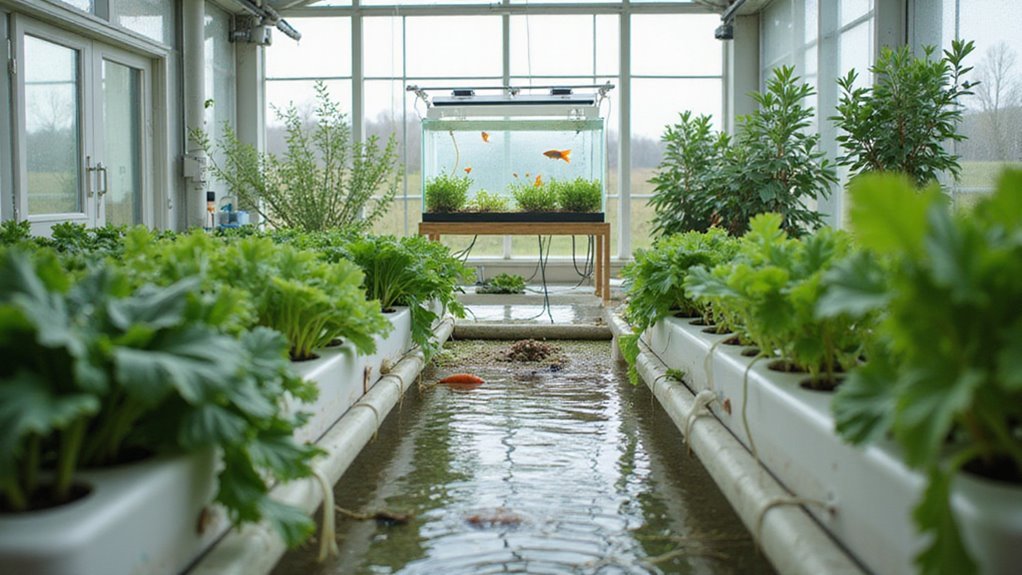
Before you plunge into using a fish to plant ratio calculator, I’d recommend gathering all your system specs—tank size, grow bed area, and the fish species you’re working with. You’ll also need your fish biomass and feeding percentage—trust me, these numbers matter more than you’d think.
Here’s what the calculator typically needs from you:
- Fish species and average size
- Daily feed rate as a percentage of body weight
- Total plant growing area in square feet
Once you input this data, the calculator generates your ideal fish density per gallon.
I’ve found this helps with pest management too, since balanced systems stay healthier.
Actually, some growers even use these ratios in their marketing strategies to show customers they’re running optimized, sustainable operations. Pretty clever, right?
Recommended Ratios for Different Aquaponics System Types
Different aquaponics system types demand their own specific ratios—it’s not a one-size-fits-all situation, unfortunately.
In my experience, understanding these differences is essential for fish maintenance and keeping your aquaponics garden thriving. I’ve found that getting this wrong can throw off your entire system balance.
| System Type | Daily Fish Feed (g/m²) |
|---|---|
| Deep Water Culture | 60-100 |
| Growbeds | 15-40 |
| NFT (Low-Solids) | 15-25 |
DWC systems actually need considerably more feed input because plants are constantly submerged in nutrient-rich water. Growbeds are more forgiving, I think, since the media provides additional filtration. NFT setups require the lightest feeding rates—probably because there’s less biological filtration happening. You’ll want to adjust based on your specific crops too.
Common Mistakes When Balancing Fish and Plants
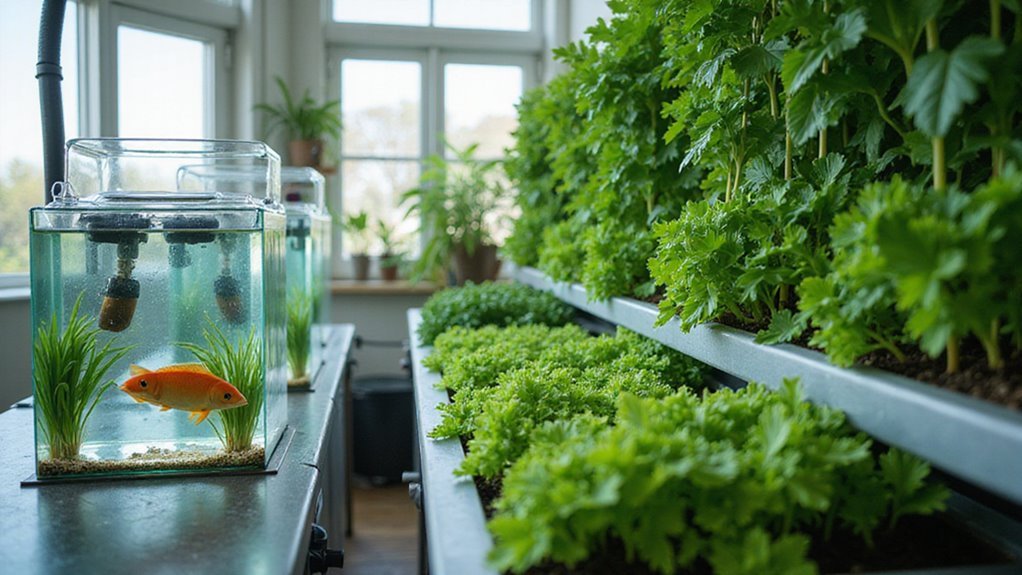
Although getting the right fish-to-plant ratio seems straightforward on paper, I’ve seen many people—myself included, honestly—make avoidable mistakes that throw everything off balance.
Here are the biggest culprits I’ve noticed:
- Ignoring fish behavior and growth patterns – Your fish won’t stay small forever, and their waste production increases appreciably as they mature.
- Skipping regular water monitoring – You can’t fix what you don’t measure, and imbalances sneak up fast.
- Forgetting about plant pruning needs – Overgrown plants absorb nutrients differently than well-maintained ones.
I think the trickiest part is remembering that aquaponics isn’t static. Using a fixed ratio without adjusting for variables like fish size or plant type? That’s probably the fastest way to end up with either algae blooms or stunted plants.
Tips for Monitoring and Adjusting Your Ratio Over Time
Once you’ve got your system running, I think regular water quality testing becomes your best friend—checking pH, ammonia, and nitrate levels tells you pretty quickly if something’s off balance.
You’ll also want to track how fast your fish are growing, because honestly, that growth rate directly impacts how many nutrients your plants are receiving.
If things seem a bit wonky, maybe adjust your stocking densities gradually rather than making big changes all at once, since sudden shifts can stress both your fish and plants.
Regular Water Quality Testing
How often should you actually test your water in an aquaponics system? I’d say weekly testing is your sweet spot.
Testing pH, ammonia, nitrite, nitrate, and dissolved oxygen keeps your aquatic microbiomes healthy and your water filtration working properly.
Here’s what I’ve learned matters most:
- Track your results – I keep a simple log to spot trends before they become problems
- Adjust feeding rates – Your test readings tell you when to cut back or increase fish food
- Use reliable tools – Whether it’s test kits or digital meters, consistency beats guesswork
In my experience, good record-keeping is like having a crystal ball for your system.
You’ll probably notice patterns that help you tweak fish populations or plant densities before anything goes wrong.
Track Fish Growth Rates
Tracking your fish growth rates might seem like extra work, but it’s actually the key to keeping your system balanced over time. I keep a simple weight log, and honestly, it’s been a game-changer for predicting when I need to adjust stocking levels.
Fish health directly impacts how fast your stock grows, and water temperature plays a huge role too. When temps drop, growth slows—it’s like trying to run through molasses.
In my experience, slower growth usually means I need to either reduce biomass or bump up feeding amounts.
Here’s the thing: faster growth might actually let you stock more fish, but you’ve got to watch your nutrient levels carefully. Maybe check weekly until you get a feel for your system’s rhythm.
Adjust Stocking Densities Gradually
Building on your growth tracking data, the next step is figuring out when and how to actually change your stocking numbers.
I’ve found that rushing this process is probably the biggest mistake new aquaponics enthusiasts make. Think of it like gradually turning up the heat—you want your system to adapt without shocking it.
Here’s what I recommend tracking as you adjust:
- Ammonia and nitrite spikes, which signal your biofilter can’t keep up
- Plant growth rates and any yellowing leaves
- Fish behavior changes like gasping or reduced appetite
Aquaponics ethics demands we prioritize fish health over production goals.
In my experience, adding just a few fish monthly while documenting system responses gives you the clearest picture.
Well, it’s slower, but sustainable growth beats a crashed system every time.
Frequently Asked Questions
What Is the Ratio of Fish to Plant in Aquaponics?
In aquaponics system design, I recommend maintaining 1 pound of fish per 3-5 square feet of plant bed. This ratio supports proper fish health management while ensuring your plants receive adequate nutrients from fish waste.
How Many Fish per Gallon in Aquaponics?
I’d recommend 1 fish per 10 gallons—that’s the bee’s knees for maintaining proper water filtration and fish health. You’ll want to regard your fish species and size, as these factors considerably affect your system’s balance.
Why Is Aquaponics Not Profitable?
Aquaponics often struggles with financial sustainability because of high startup costs, inefficient system management, and limited market demand for locally-grown produce. I’ve found that without proper planning, you’ll likely face losses.
What Is the Most Profitable Fish for Aquaponics?
Tilapia’s the golden goose of aquaponics—I’d recommend them for their fast growth and hardiness. You’ll find they’re forgiving with water quality fluctuations and disease management, making them perfect if you’re seeking profitable, beginner-friendly fish.